
Summary
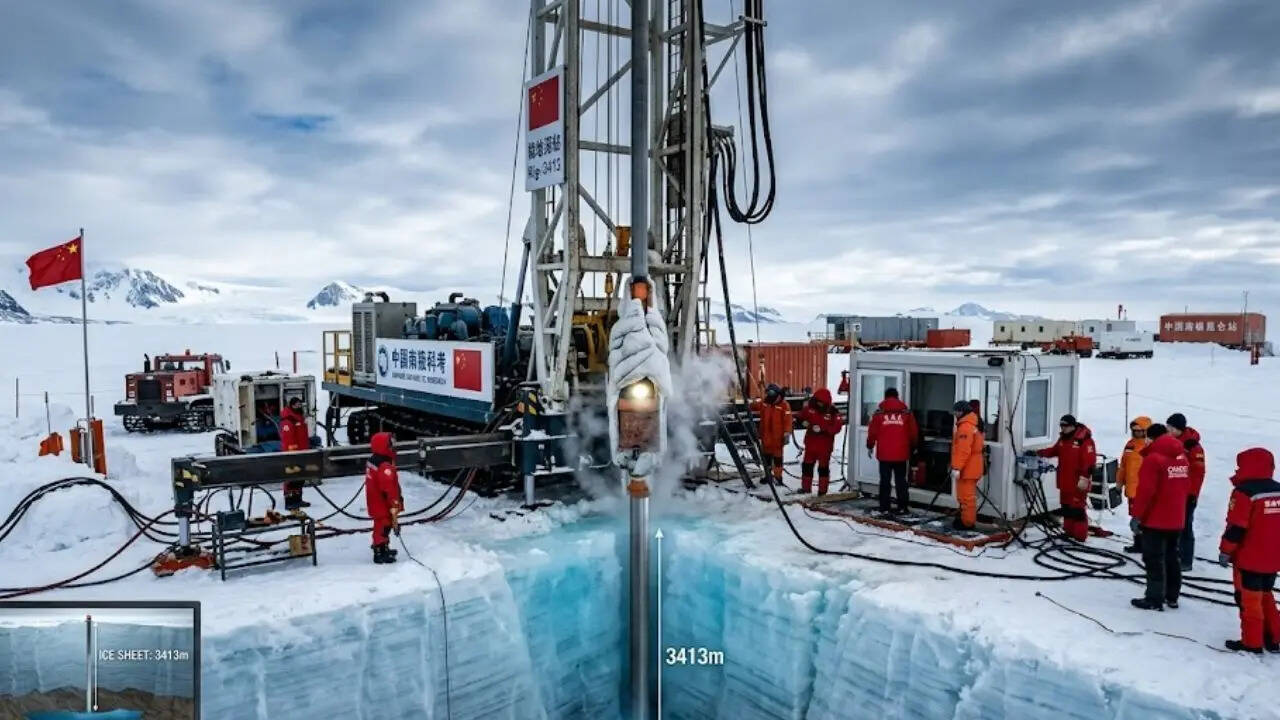
Chinese scientists have successfully drilled through 3,413 meters of Antarctic ice to reach Lake Qilin, a large body of water hidden deep beneath the frozen surface. This achievement marks a major milestone in polar research, as it is the first time China has reached a subglacial lake at such a great depth. The mission aims to study ancient water and search for signs of life that have been isolated from the outside world for millions of years. This breakthrough provides a new way to understand the history of our planet and the effects of climate change.
Main Impact
The success of this drilling project shows a significant leap in scientific technology and engineering. By reaching Lake Qilin, researchers can now access a "time capsule" that has been sealed off by thick ice for ages. This allows for the study of unique ecosystems that might exist in extreme conditions without sunlight or fresh air. Furthermore, the data gathered from the ice layers and the water below will help experts predict how the Antarctic ice sheet might react to rising global temperatures, which is vital for understanding future sea-level rise.
Key Details
What Happened
The drilling operation was part of China’s 40th Antarctic scientific expedition. The team set up their equipment in a remote area known as Princess Elizabeth Land. To reach the water, they used a combination of advanced drilling methods, including a deep-ice core drilling system. The process required precision to ensure the drill did not get stuck and to prevent any surface materials from polluting the pristine water below. After weeks of work, the drill finally broke through the bottom of the ice sheet, making contact with the liquid water of Lake Qilin.
Important Numbers and Facts
The project involved several impressive figures and technical details:
- Total Depth: The drill reached exactly 3,413 meters below the surface.
- Location: Lake Qilin is situated in Princess Elizabeth Land, one of the least explored parts of Antarctica.
- Lake Size: Lake Qilin is considered one of the largest subglacial lakes in the region, covering a significant area beneath the ice.
- Expedition: This work was carried out during the 40th Chinese Antarctic Research Expedition, which involved hundreds of researchers and support staff.
- Isolation: The water in the lake is believed to have been separated from the atmosphere for at least several million years.
Background and Context
Antarctica is not just a solid block of ice. Beneath its massive frozen shell lie hundreds of lakes. These are called subglacial lakes. They stay liquid because of two main reasons: the heat coming from the Earth’s core and the immense pressure from the miles of ice sitting on top of them. Scientists are very interested in these lakes because they represent some of the most extreme environments on Earth. Studying them is similar to studying what life might look like on frozen moons in our solar system, such as Jupiter's moon Europa. Before this Chinese mission, only a few other countries, including Russia and the United States, had successfully drilled into these hidden Antarctic lakes.
Public or Industry Reaction
The international scientific community has viewed this achievement with great interest. Experts in polar science have praised the technical skill required to drill over three kilometers deep in such a harsh environment. Many researchers believe that the data from Lake Qilin will fill important gaps in our knowledge of the Antarctic continent. Environmental groups have also kept a close watch, emphasizing the need to keep these ancient waters clean. The success of the mission has strengthened China's position as a leading player in global polar research and climate science.
What This Means Going Forward
Now that the hole has been drilled, the next phase of the project involves careful sampling. Scientists plan to lower sensors and collection bottles into the lake to bring up water and sediment samples. The biggest challenge will be doing this without introducing bacteria or chemicals from the surface. If they find living organisms in the water, it could change our understanding of how life survives in the dark and cold. Additionally, the ice cores pulled out during the drilling process act like a history book, with each layer of ice containing bubbles of air from thousands of years ago. Analyzing these will provide a detailed record of Earth's past climate.
Final Take
Reaching Lake Qilin is more than just a feat of engineering; it is a gateway to the unknown. By looking deep beneath the ice, we are finding new ways to protect our future by learning from the distant past. This mission proves that even the most hidden parts of our world can be reached through steady work and smart technology. The discoveries made here will likely influence climate science and biology for many years to come.
Frequently Asked Questions
What is a subglacial lake?
A subglacial lake is a body of liquid water that is trapped between the bottom of an ice sheet and the ground. They stay liquid due to pressure and heat from the Earth.
Why is Lake Qilin important?
It is one of the largest hidden lakes in Antarctica. Because it has been isolated for millions of years, it may contain ancient life forms and clues about the history of the Earth's climate.
How do scientists drill through so much ice?
Scientists use specialized drills that can cut through ice or melt it using hot water. They must be very careful to keep the equipment clean so they do not contaminate the ancient water below.

