
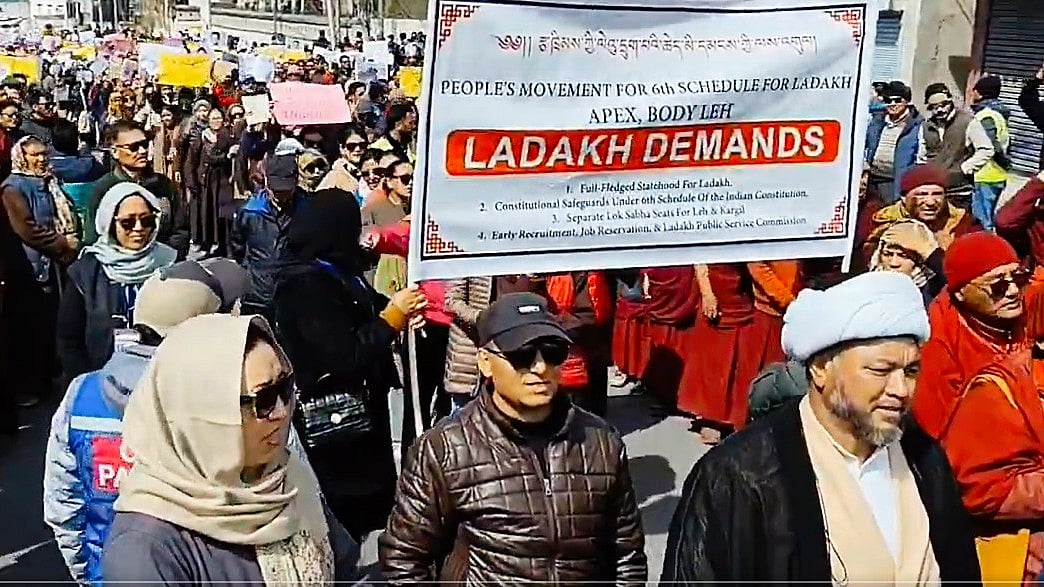
Summary
The Kargil Democratic Alliance (KDA) has once again stated that its demands for statehood and special constitutional rights for Ladakh are not up for debate. The group is calling on the Central Government to restart talks that have been paused for several months. While the KDA is open to hearing new ideas from the government, they have made it clear that they will not accept any plan that only offers local councils instead of full statehood and tribal protections.
Main Impact
This development shows a growing tension between the people of Ladakh and the central government in New Delhi. Since Ladakh became a Union Territory in 2019, many local residents feel they have lost their political voice and control over their land. By standing firm on their demands, the KDA and the Leh Apex Body (LAB) are signaling that the current style of governance is not enough. If the government does not respond soon, the region could see a return to large-scale protests and strikes, which could affect stability in this sensitive border area.
Key Details
What Happened
Leaders from the KDA met in Kargil to discuss the future of their movement. They expressed frustration because the Ministry of Home Affairs had promised to hold a meeting in February but never followed through. The KDA co-chairman, Asgar Ali Karbalai, told the media that the people of Ladakh are tired of waiting. He explained that while they prefer to talk, they are ready to protest again if the government continues to ignore them. The group also met with the Lieutenant Governor to push for the release of young people who were arrested during previous demonstrations.
Important Numbers and Facts
The movement for statehood has been active since 2019, when the former state of Jammu and Kashmir was divided. Ladakh was turned into a Union Territory without its own law-making body. The last formal meeting between Ladakh leaders and the government took place on February 4. At that time, officials promised another meeting within 10 to 15 days, but more than two months have passed without any word. The KDA and LAB represent the two main districts of Ladakh—Kargil and Leh—showing a rare moment of total unity between the two regions.
Background and Context
To understand why this matters, it is important to know what the Sixth Schedule is. In India, the Sixth Schedule is a part of the Constitution that protects tribal areas. It allows local people to make their own rules about land, forests, and water. Since most people in Ladakh belong to tribal communities, they want these protections to ensure that outsiders cannot easily buy their land or take their jobs. When Ladakh was part of Jammu and Kashmir, it had certain protections that disappeared when it became a Union Territory. Now, residents feel that bureaucrats from outside the region are making all the decisions, leaving the local people with no power to govern themselves.
Public or Industry Reaction
The reaction in Ladakh has been one of shared frustration. Leaders like Sajjad Kargili have pointed out that for six years, the region has had no elected representatives at a high level. This lack of a "democratic voice" is a major concern for the public. Even famous figures like Sonam Wangchuk have joined the cause, using hunger strikes to draw attention to the issue. The KDA and LAB have also worked hard to show that they are united. They want to stop any rumors that the two districts are fighting each other. Both groups agree that a "council-based" system, which only gives limited power to local committees, is not a substitute for being a full state.
What This Means Going Forward
The next steps depend entirely on how the Ministry of Home Affairs responds. If the government offers a "fresh proposal" that includes real constitutional safeguards, the KDA has said they will listen with an open mind. However, if the government tries to offer smaller concessions, like more money for local councils, the leaders are likely to reject it. There is a high risk of more shutdowns and hunger strikes in the coming months. The leaders have also asked the government to drop legal cases against protesters as a sign of good faith. Without this, the trust between the people of Ladakh and the central government will continue to break down.
Final Take
The situation in Ladakh is a test of how the government handles the needs of small, sensitive regions. The people are not just asking for more money; they are asking for the right to protect their culture and have a say in their own future. For a lasting peace, the government must move beyond simple promises and engage in a real, honest conversation that respects the unique identity of the Ladakhi people.
Frequently Asked Questions
What is the Sixth Schedule?
The Sixth Schedule is a part of the Indian Constitution that gives tribal communities the power to manage their own land, resources, and local laws through special councils.
Why does Ladakh want statehood?
Ladakh wants statehood so it can have its own elected assembly. Currently, as a Union Territory, it is mostly governed by officials appointed by the central government rather than local leaders.
Are the people of Leh and Kargil working together?
Yes. Although the two districts have had differences in the past, the Leh Apex Body and the Kargil Democratic Alliance are now united in their demand for statehood and constitutional protections.

