
Summary
Today marks the 107th anniversary of the Jallianwala Bagh massacre, a day that changed the history of India forever. On April 13, 1919, British colonial troops opened fire on a large group of unarmed men, women, and children in Amritsar. This violent act killed hundreds of innocent people and injured thousands more. The event became a major turning point in India’s fight for independence, as it turned the public against British rule and united the country in a way never seen before.
Main Impact
The massacre at Jallianwala Bagh destroyed any remaining trust between the Indian people and the British government. Before this event, many Indian leaders still hoped to work with the British to gain more rights through peaceful talks. However, the cruelty of the shooting showed that the colonial government was willing to use extreme violence to keep control. This led to a massive shift in the independence movement. It moved from asking for small changes to demanding complete freedom from British rule. The event also brought international attention to the harsh reality of colonial life in India.
Key Details
What Happened
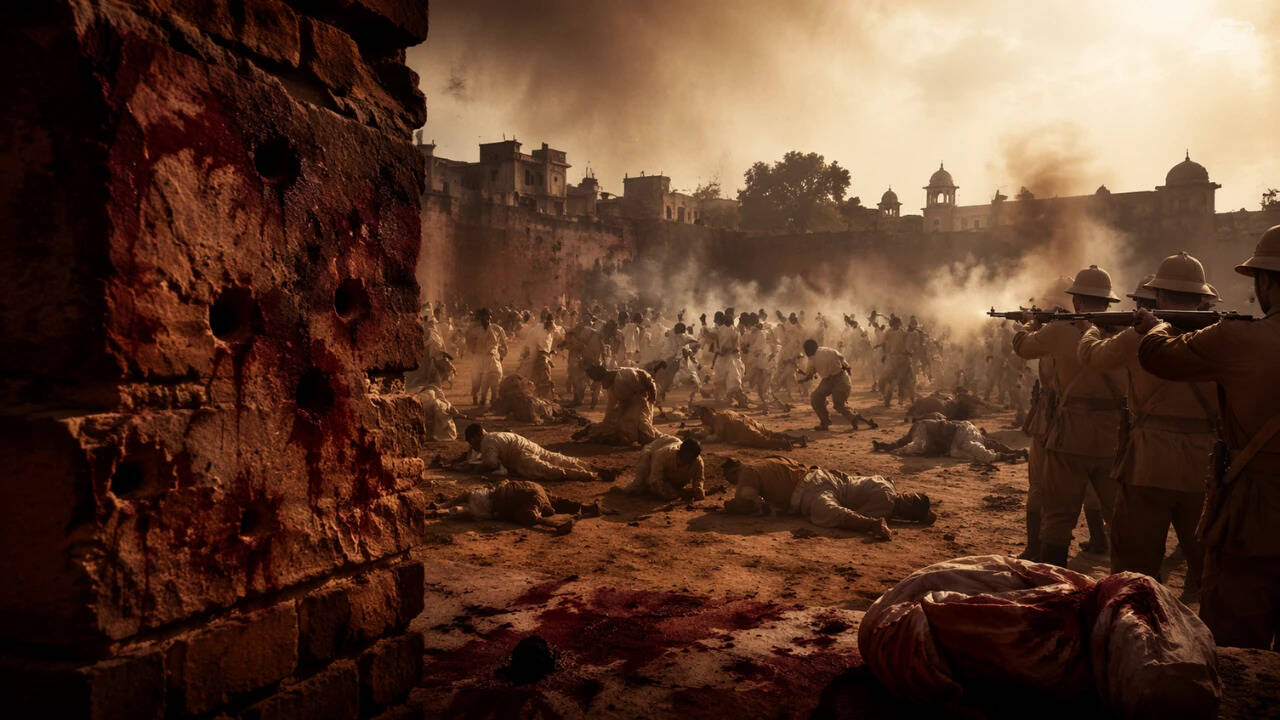
On the day of the Baisakhi festival, thousands of people gathered in Jallianwala Bagh, a public garden with high walls. Some people were there to celebrate the festival, while others were peacefully protesting the arrest of two local leaders. General Reginald Dyer arrived at the garden with a group of soldiers. He blocked the only narrow entrance, which was also the only way for people to get out. Without giving any warning or asking the crowd to leave, he ordered his soldiers to start shooting. The firing continued for about ten minutes, targeting the areas where the crowd was thickest. People had nowhere to run, and many died while trying to climb the walls or jumping into a deep well to escape the bullets.
Important Numbers and Facts
The scale of the violence was shocking. The soldiers fired a total of 1,650 rounds of ammunition. According to official British records at the time, 379 people were killed and about 1,200 were wounded. However, Indian leaders and witnesses claimed the actual death toll was much higher, with more than 1,000 people losing their lives. The youngest victim was only a few months old, and the oldest was over 80. The "Martyrs' Well" inside the garden remains a symbol of the tragedy, as many bodies were recovered from it after the shooting stopped.
Background and Context
The massacre did not happen in a vacuum. It was the result of growing tension caused by the Rowlatt Act. This was a law passed by the British that allowed the government to put people in jail without a trial. Indians called it the "Black Act" because it took away basic legal rights. Protests broke out across the country, especially in the Punjab region. The British government responded by banning all public meetings and gatherings. Many people who went to Jallianwala Bagh on April 13 were visitors from nearby villages who did not know about the ban. They were caught in a trap set by a government that wanted to send a message of fear to the entire nation.
Public or Industry Reaction
The reaction to the massacre was one of horror and anger. Rabindranath Tagore, the famous poet and Nobel Prize winner, gave up his knighthood in protest, stating that such honors meant nothing in a country treated with such cruelty. Mahatma Gandhi, who had previously served the British in some ways, completely lost his faith in their sense of justice. He soon started the Non-Cooperation Movement, which encouraged Indians to stop using British goods and stop working for the colonial government. Even in Britain, some politicians spoke out against the act, calling it "monstrous." However, many others supported General Dyer, which only made Indians more determined to win their freedom.
What This Means Going Forward
Even after 107 years, the memory of Jallianwala Bagh remains strong in the hearts of Indians. The site is now a national memorial that attracts millions of visitors every year. It serves as a reminder of the heavy price paid for the freedom that people enjoy today. The bullet marks are still visible on the walls, kept as a permanent record of the violence. For many, the event is a lesson in the importance of human rights and the dangers of unchecked power. It continues to be a central part of history lessons in schools, ensuring that future generations never forget the sacrifices made by those who came before them.
Final Take
The Jallianwala Bagh massacre was a dark day, but it also lit a fire that eventually led to the end of the British Empire in India. What was meant to be an act of control became the spark for a revolution. It proved that while bullets can kill people, they cannot kill the desire for liberty. The legacy of those ten minutes in 1919 lives on in the spirit of a free and independent India.
Frequently Asked Questions
What was the main reason for the Jallianwala Bagh massacre?
The massacre happened because British General Dyer wanted to punish people for gathering in protest against the Rowlatt Act and to strike fear into the Indian population.
Who was General Dyer?
General Reginald Dyer was the British officer who ordered his troops to fire on the unarmed crowd at Jallianwala Bagh without any warning.
How did the massacre affect the Indian independence movement?
It was a major turning point that united Indians against British rule and led Mahatma Gandhi to start the Non-Cooperation Movement, pushing for full independence.



