
Summary
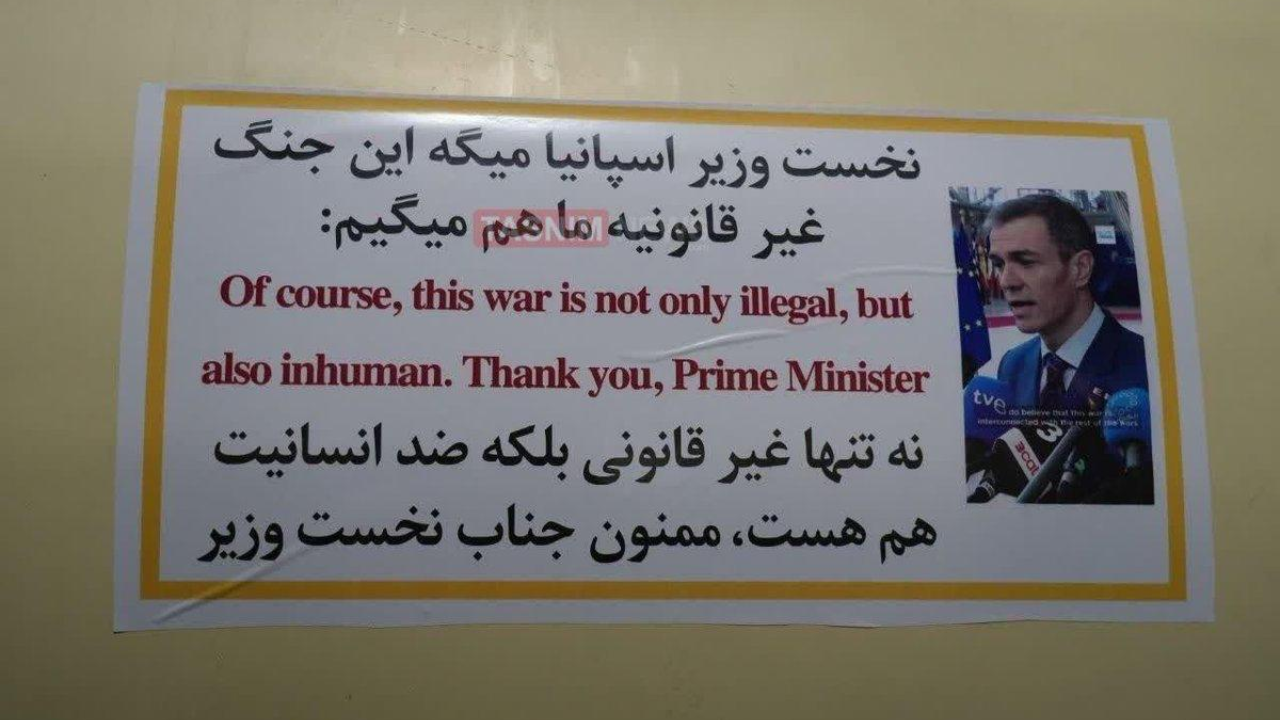
Iran has taken the unusual step of printing anti-war messages from Spanish Prime Minister Pedro Sanchez on missiles aimed at Israel. These weapons now carry quotes that describe the current conflict as both illegal and inhuman. By using the words of a prominent European leader, Iran is attempting to highlight international criticism of military actions in the Middle East. This move has drawn significant attention to the growing diplomatic divide between Western nations regarding the ongoing violence.
Main Impact
The primary impact of this development is the way it turns a call for peace into a tool for psychological warfare. Pedro Sanchez has been one of the most vocal critics of the war, often calling for a ceasefire and better protection for civilians. By placing his words on missiles, Iran is trying to show that even leaders within the NATO alliance are unhappy with the current military operations. This creates a difficult situation for the Spanish government, which must balance its message of peace with the fact that its words are being used by a foreign military power.
Key Details
What Happened
Recent images released by Iranian sources show various missiles prepared for use in the conflict against Israeli and American forces. On the sides of these large weapons, text is written in both English and Persian. The text directly quotes Spanish Prime Minister Pedro Sanchez, specifically using his descriptions of the war as "illegal" and "inhuman." These phrases were taken from recent public speeches where Sanchez criticized the scale of the military response and the loss of life in the region.
Important Numbers and Facts
Spain has been a leading voice in Europe calling for the recognition of a Palestinian state, a move that has already caused tension with the Israeli government. The use of two languages on the missiles—English and Persian—suggests that the message is intended for both a local Iranian audience and a global one. This is not the first time Iran has used slogans on its weaponry, but it is rare for them to use the specific words of a sitting Western head of state to justify their military stance.
Background and Context
To understand why this matters, it is important to look at Spain's recent foreign policy. While many Western countries have remained fully supportive of Israel's military actions, Spain has taken a more critical path. Prime Minister Sanchez has repeatedly called for the international community to stop the violence and has even suggested that European trade deals with Israel should be reviewed. This has made him a popular figure among those who oppose the war, but it has also led to diplomatic arguments between Madrid and Jerusalem.
Iran, on the other hand, is in a long-standing struggle with Israel and the United States. They often look for ways to show that the world is turning against their enemies. By using Sanchez's words, they are trying to prove that their opposition to the war is shared by people in the West. It is a way to claim moral high ground by using the language of human rights and international law, even while preparing for military strikes.
Public or Industry Reaction
The reaction to these images has been mixed. Many diplomatic experts see this as a clever but provocative move by Tehran to cause friction between Western allies. In Spain, the government faces a tough choice. If they stop criticizing the war, they look like they are giving in to pressure. If they continue, they risk having their words used again by groups or countries they do not support. International observers note that this "quote warfare" is becoming more common as countries try to win the battle of public opinion alongside the physical battle on the ground.
What This Means Going Forward
This event shows that the war of words is just as intense as the physical conflict. Going forward, we can expect to see more instances where public statements from democratic leaders are used in propaganda. It may lead to leaders being more careful with their choice of words, or it could lead to even more direct diplomatic clashes. For Spain, the challenge will be to keep its message of peace clear without letting it be used to justify further violence. The relationship between Spain and Israel is likely to remain tense as long as these messages continue to be highlighted by Iran.
Final Take
Writing a message of peace on a weapon of war is a deep irony that shows the complexity of modern global politics. While the words "illegal" and "inhuman" were meant to stop the fighting, they are now literally riding on the side of missiles intended to continue it. This situation serves as a reminder that in a connected world, what a leader says in Europe can quickly become part of a military strategy thousands of miles away.
Frequently Asked Questions
Why did Iran put the Spanish PM's words on missiles?
Iran used the quotes to show that Western leaders also criticize the war. It is a form of propaganda meant to make their military actions seem supported by international law and human rights concerns.
What did Pedro Sanchez actually say?
The Spanish Prime Minister has called the military operations in the region "illegal" and "inhuman" during several public speeches, focusing on the high number of civilian deaths and the need for a ceasefire.
How has Spain responded to this?
While the Spanish government continues to call for peace, they generally do not want their official statements used by foreign militaries. This situation creates a difficult diplomatic balance for Spain as they try to maintain their moral stance without supporting Iran's actions.

