Summary
Iran has crossed a major red line set by President Donald Trump by killing U.S. service members in an attack on a base in Jordan. This event has ended a shaky ceasefire and pushed the U.S. and Iran back toward all-out war. The fighting has already caused oil prices to jump and threatens to close the Strait of Hormuz, a key waterway for global energy supplies.
Main Impact
The deaths of American troops mark a turning point in the conflict. President Trump had previously told his aides that any U.S. military deaths caused by Iran would lead him to end the ceasefire and resume full-scale war. The White House has not confirmed a return to all-out war, but it has already reinstated a naval blockade and launched days of airstrikes against Iran. The fighting is now escalating quickly, with no clear end in sight.
Key Details
What Happened
The U.S. military has restarted a naval blockade and bombed Iran for several days in a row. The airstrikes have focused on coastal areas near the Strait of Hormuz but have recently expanded to hit infrastructure like railways that could be used to move weapons. Iran has responded by attacking commercial ships and U.S. military assets in the Persian Gulf region. It has also targeted energy facilities and water desalination plants.
Important Numbers and Facts
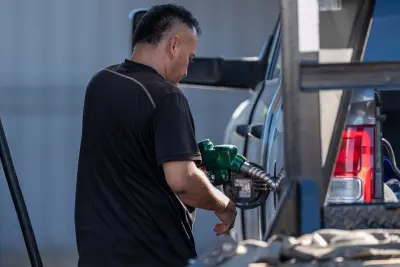
Oil prices have risen sharply as fighting has intensified. Countries that buy oil have used up their stockpiles, which are now at the lowest level in decades. This leaves little room to handle another long closure of the Strait of Hormuz. On Friday, no ships crossed using the U.S.-backed route through the strait, while Iran’s route saw seven transits. The U.S. had set up an alternate path to bypass an Iranian corridor, but the renewed fighting has effectively shut it down.
Background and Context
The conflict began with a ceasefire agreement that both sides signed last month. That deal has since fallen apart. The U.S. blames Iran for violating the agreement by refusing to reopen the Strait of Hormuz and attacking ships outside of Tehran’s approved corridor. Iran, in turn, says the U.S. broke the deal by continuing airstrikes. The Strait of Hormuz is a narrow waterway that about one-fifth of the world’s oil passes through. Control of this strait is the main point of dispute between the two countries.
Public or Industry Reaction
Experts warn that the situation is dangerous and could lead to a long, endless war. Ali Vaez, the Iran Project Director at the International Crisis Group, wrote that the collapse of the ceasefire could remove the last barrier between occasional fighting and a forever war. Gregory Brew, a senior analyst with the Eurasia Group, said there is no military option to reopen the strait. He predicted that Iran will not give up its main source of leverage and that some form of Iranian fee to cross the strait seems likely. He also said that U.S. attacks only make Iran more determined.
What This Means Going Forward
The fighting is likely to continue escalating. Iran’s supreme leader has warned of “unforgettable lessons” if the U.S. keeps attacking and called President Trump’s signature “worthless and invalid.” Meanwhile, hopes for a new ceasefire are fading. Inside Iran, the renewed blockade has deepened a split between pragmatists, who want to negotiate, and hard-liners, who want to fight more aggressively. The stalemate raises the risk of an endless war, something President Trump campaigned on avoiding. The global economy could face another major shock if the Strait of Hormuz stays closed for a long time.
Final Take
The U.S. and Iran are now locked in a cycle of attacks and counterattacks with no clear way out. The deaths of American troops have removed the last barrier to all-out war. Both sides seem unwilling to back down, and the main dispute over control of the Strait of Hormuz remains unresolved. As one analyst put it, the options are to escalate or cut a deal, and the U.S. is likely to try escalation first, fail, and then end up negotiating.
Frequently Asked Questions
Why is the Strait of Hormuz so important?
The Strait of Hormuz is a narrow waterway between Iran and Oman. About one-fifth of the world’s oil passes through it. If the strait is closed, oil prices can rise sharply and hurt the global economy.
What was the ceasefire agreement about?
The ceasefire was a temporary deal signed last month. It was meant to stop fighting and reopen the Strait of Hormuz. But both sides accuse each other of breaking the agreement, and the deal has now collapsed.
Could this lead to a long war?
Many experts think yes. The U.S. and Iran are stuck in a cycle of attacks. Neither side seems willing to give in. Without a new ceasefire, the fighting could go on for a long time, which some are calling a “forever war.”