
Summary
India has a long and proud history of deep thinking and scientific discovery. However, there is a strange gap when it comes to winning the Nobel Prize. While early figures like Rabindranath Tagore and C.V. Raman won these awards over a century ago, the country has faced long periods without such global recognition. This situation is often called a paradox because India has a huge population and many smart people, yet the top prizes remain rare for those working within the country. Understanding why this happens involves looking at how research is funded, where talented people choose to live, and the history of the awards themselves.
Main Impact
The lack of Nobel Prizes for researchers based in India highlights a major challenge for the nation’s scientific and academic growth. While many people of Indian origin win these awards, they often do so while working for universities in the United States or Europe. This suggests that while the talent is there, the environment at home may not provide the tools or time needed for world-changing work. This gap affects how the world views India’s innovation and puts pressure on the government to change how it supports its best minds.
Key Details
What Happened
The story of India and the Nobel Prize started with great success. In 1913, Rabindranath Tagore became the first non-European to win the Nobel Prize in Literature. Not long after, in 1930, C.V. Raman won the prize in Physics for his work on how light scatters. These wins showed that India could compete at the highest level. However, in the decades that followed, the number of winners living and working in India stayed very low. Most recent winners with Indian roots have been citizens of other countries, working in foreign labs with better funding and equipment.
Important Numbers and Facts
Since the Nobel Prizes began in 1901, only a small handful of winners have been Indian citizens at the time of their award. In contrast, several people born in India have won while representing other nations. For example, Har Gobind Khorana, Subrahmanyan Chandrasekhar, and Venki Ramakrishnan all won in science fields, but they did their most important work in the West. More recently, Abhijit Banerjee won the prize in Economics in 2019, but he is based at a university in the United States. These figures show a clear trend: Indian talent often needs to leave the country to get the resources required for a Nobel-level breakthrough.
Background and Context
There are several reasons why India faces this long gap in awards. One major reason is "brain drain." This is when the smartest students and researchers move to other countries because they offer better pay, better labs, and more freedom to study what they want. In India, many researchers face a lack of money for long-term projects. Most scientific funding goes toward things that show results quickly, rather than "blue-sky" research that might take twenty years to pay off.
Another issue is the focus on publishing papers. In many Indian universities, success is measured by how many articles a person writes each year. This "publish or perish" culture encourages people to do small, safe projects instead of taking big risks on new ideas. To win a Nobel Prize, a scientist usually needs to spend many years working on a single, difficult problem that might not show results for a long time.
Public or Industry Reaction
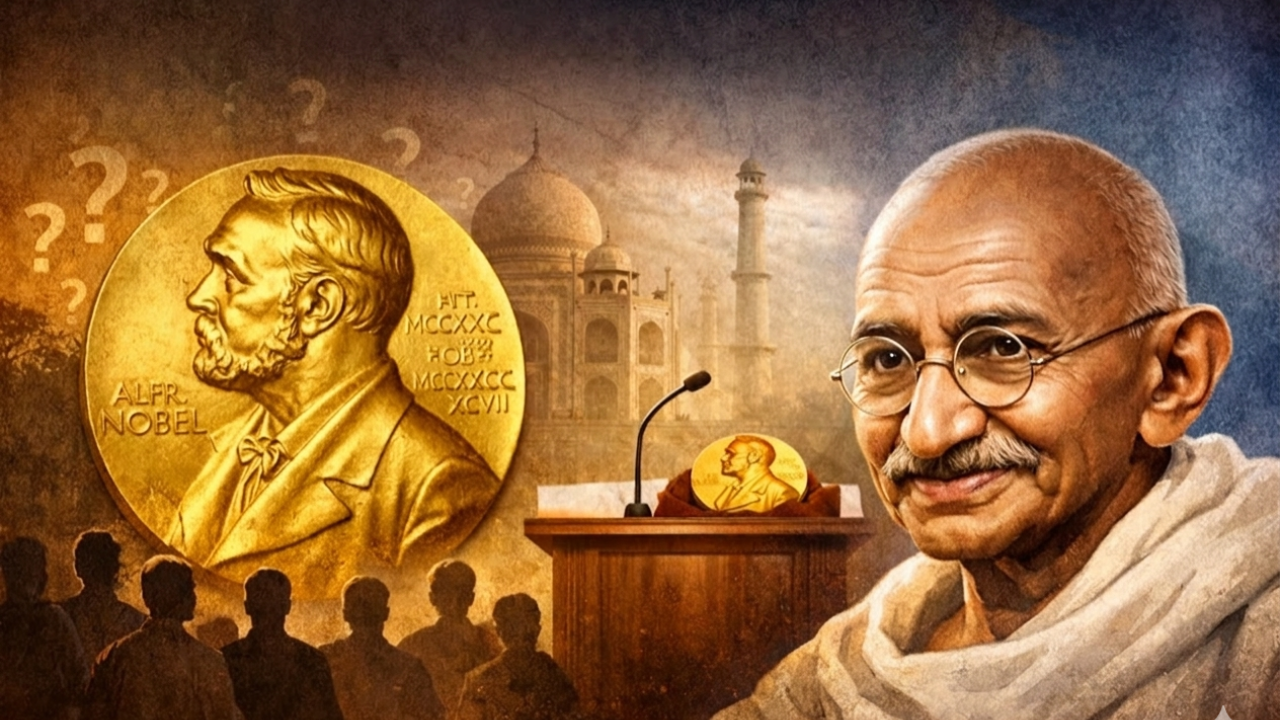
The most famous story of a missed Nobel Prize involves Mahatma Gandhi. He was nominated for the Peace Prize five times but never won. The Nobel Committee has since admitted that this was a mistake. They even suggested that the prize was not awarded in 1948, the year Gandhi died, because there was no suitable living candidate—a clear nod to his passing. This omission remains a point of frustration for many people in India and around the world. It shows that the prizes are not always about merit alone; sometimes, politics and the timing of global events play a role in who gets chosen.
What This Means Going Forward
For India to close this gap, the government and private companies need to change how they think about science and education. Increasing the amount of money spent on research is a start, but it is not the only answer. The country needs to create a system where researchers can stay in India and still have access to the best technology. There also needs to be a shift in culture that values long-term thinking over quick results. If India can keep its best minds at home and give them the freedom to explore new ideas, the next Nobel Prize might come sooner rather than later.
Final Take
The Nobel Prize is a symbol of human achievement, but it does not tell the whole story of a nation’s intelligence. India has the talent and the history to lead the world in many fields. The current "paradox" is a sign that the country must invest more in its people and its labs. By supporting deep research and keeping talent at home, India can turn its potential into global recognition. The goal is not just to win more medals, but to create an environment where the next great idea can grow and help the entire world.
Frequently Asked Questions
Why did Mahatma Gandhi never win a Nobel Peace Prize?
Gandhi was nominated five times, but the committee never selected him. Some believe it was due to the political situation at the time. The Nobel Committee later expressed regret for not giving him the award before he died.
What is "brain drain" and how does it affect India?
Brain drain happens when highly educated people leave their home country to work elsewhere. For India, this means many of its best scientists and thinkers move to the US or Europe, where they often win awards that India could have claimed if they had stayed.
Who was the first Indian to win a Nobel Prize?
Rabindranath Tagore was the first Indian to win. He received the Nobel Prize in Literature in 1913 for his collection of poems called Gitanjali. He was also the first person from outside of Europe to win this honor.



