
Summary
The local government elections in Gujarat have reached a major turning point as the deadline for withdrawing candidate names has ended. Starting April 16, political parties are moving into a high-speed campaign phase to win over voters for thousands of seats in municipalities and panchayats. While many seats have already been decided without a vote, the remaining areas are seeing intense political heat, including serious warnings from local leaders and tragic accidents involving candidates.
Main Impact
The most significant impact of the recent deadline is the high number of seats won unopposed. This means that in hundreds of local areas, only one candidate remained after others withdrew their names, leading to an automatic win for those individuals. This development shows a strong push by the ruling party to secure power even before the first vote is cast. However, this has also led to accusations of pressure and threats used to force opponents out of the race, raising questions about the fairness of the local democratic process.
Key Details
What Happened
On April 15, the window for candidates to take back their nomination forms closed across Gujarat. This process covered about 10,000 seats in various local bodies, including city corporations, municipalities, and village-level panchayats. Chief Minister Bhupendra Patel officially started the campaign in Mehsana, where he urged supporters to aim for a victory so large that the opposition would hesitate to even run in future elections. As the deadline passed, reports emerged of candidates being persuaded or pressured to drop out, leading to a record number of early winners.
Important Numbers and Facts
The scale of the election is massive, and the numbers reflect the intense activity behind the scenes. A total of 1,559 candidates withdrew their nomination papers across the state. Because of these withdrawals, 378 seats have already been decided without any voting. This includes 35 seats in major city corporations and 340 seats in general municipality elections. Three additional seats were decided in by-elections. State election officials mentioned that these numbers might go up as more data arrives from rural districts. These unopposed wins give the leading party a significant head start before the actual polling day.
Background and Context
Local body elections are often called the "grassroots" of democracy. They include taluka panchayats, district panchayats, and municipalities. These elections matter because the winners manage local issues like roads, water supply, and schools. In Gujarat, these elections are also a test of strength for the major political parties before larger state or national contests. The current atmosphere is very tense because both the ruling party and the opposition want to prove they have the support of the common people. This year, the focus has shifted from local issues to religious identity and political dominance.
Public or Industry Reaction
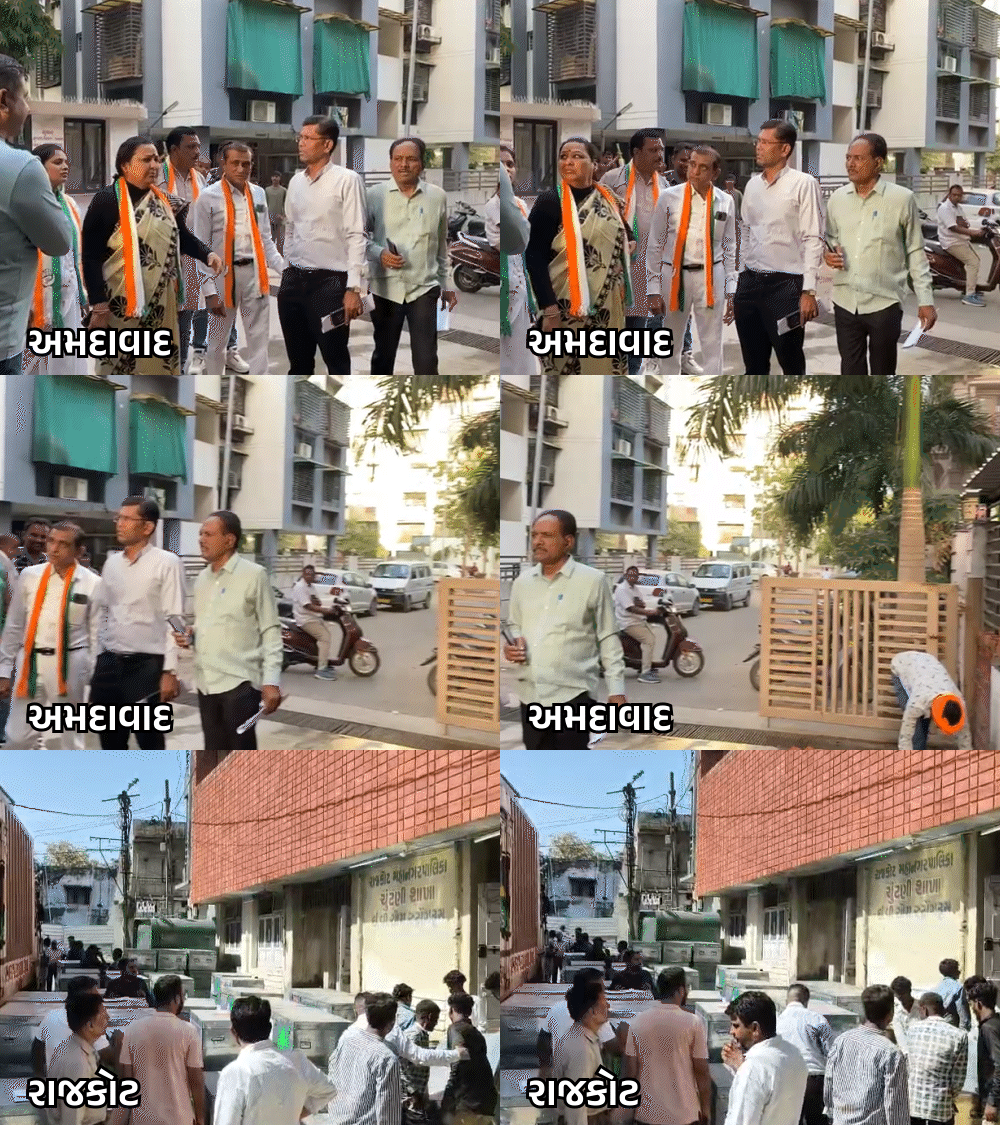
The reaction on the ground has been a mix of anger and mourning. In Ahmedabad, the Congress party claimed they found proof of illegal construction work done by a BJP candidate, using this to question the candidate's fitness for office. In the Vasna area, local residents reportedly blocked BJP candidates, showing signs of local unhappiness.
A major controversy broke out in Vadodara’s Ward 15. Some housing societies put up banners stating that only "Ram devotees" lived there and that Congress members were not allowed to enter. Former MLA Madhu Shrivastava reacted strongly to this. He stated that he and his followers have been devotees of Lord Ram for years and do not need a certificate from anyone. He issued a stern warning, telling people to take down the banners immediately. He suggested that if they did not, no one would be able to protect them from the consequences once the election was over.
What This Means Going Forward
As the campaign moves into its final weeks, the focus will be on door-to-door visits and large public rallies. However, the race has been saddened by the death of Jasiben Dabhi, a BJP candidate for the Bavla Taluka Panchayat. She died in a tragic road accident, leading to messages of grief from high-ranking party leaders. Her death may lead to a pause or a change in the election schedule for that specific seat. For the rest of the state, the focus remains on whether the opposition can challenge the ruling party's momentum or if the trend of unopposed wins will continue to define this election cycle.
Final Take
The Gujarat local elections are proving to be more than just a vote for local leaders; they have become a battle of influence and warnings. While the high number of unopposed wins shows a clear political strategy, the heated language and local protests suggest that the path to victory is not without conflict. The coming days will test whether the focus stays on community development or if personal and religious attacks will dominate the conversation.
Frequently Asked Questions
How many seats were won without a vote?
So far, 378 seats have been won unopposed across various municipalities and corporations because other candidates withdrew their names.
What was the warning given by Madhu Shrivastava?
He warned people to remove banners that blocked certain political parties based on religious reasons, stating that there would be consequences after the election if the banners remained.
Why did the BJP candidate from Bavla not continue the race?
Jasiben Dabhi, the BJP candidate for the Bavla Taluka Panchayat, unfortunately passed away in a road accident during the election period.



