
Summary
The Bharatiya Janata Party (BJP) in Gujarat is facing a major internal crisis as local leaders and workers protest against the choice of candidates for the upcoming elections. In Rajkot, the situation became so tense that the police Crime Branch had to be called in to manage a large crowd of angry supporters. Similar protests and resignations are happening in Ahmedabad, Vadodara, and Surat. These disagreements come at a critical time, as the deadline for filing election forms is very close.
Main Impact
The main impact of this unrest is a visible split within the party’s local units. Long-time workers are upset because they feel their hard work is being ignored in favor of new people or those coming from other parties. This internal fighting has forced senior leaders to hold emergency meetings late into the night. If the party cannot calm these protests, it may face a loss of support or see its own members running as independent candidates, which could split the vote during the election.
Key Details
What Happened
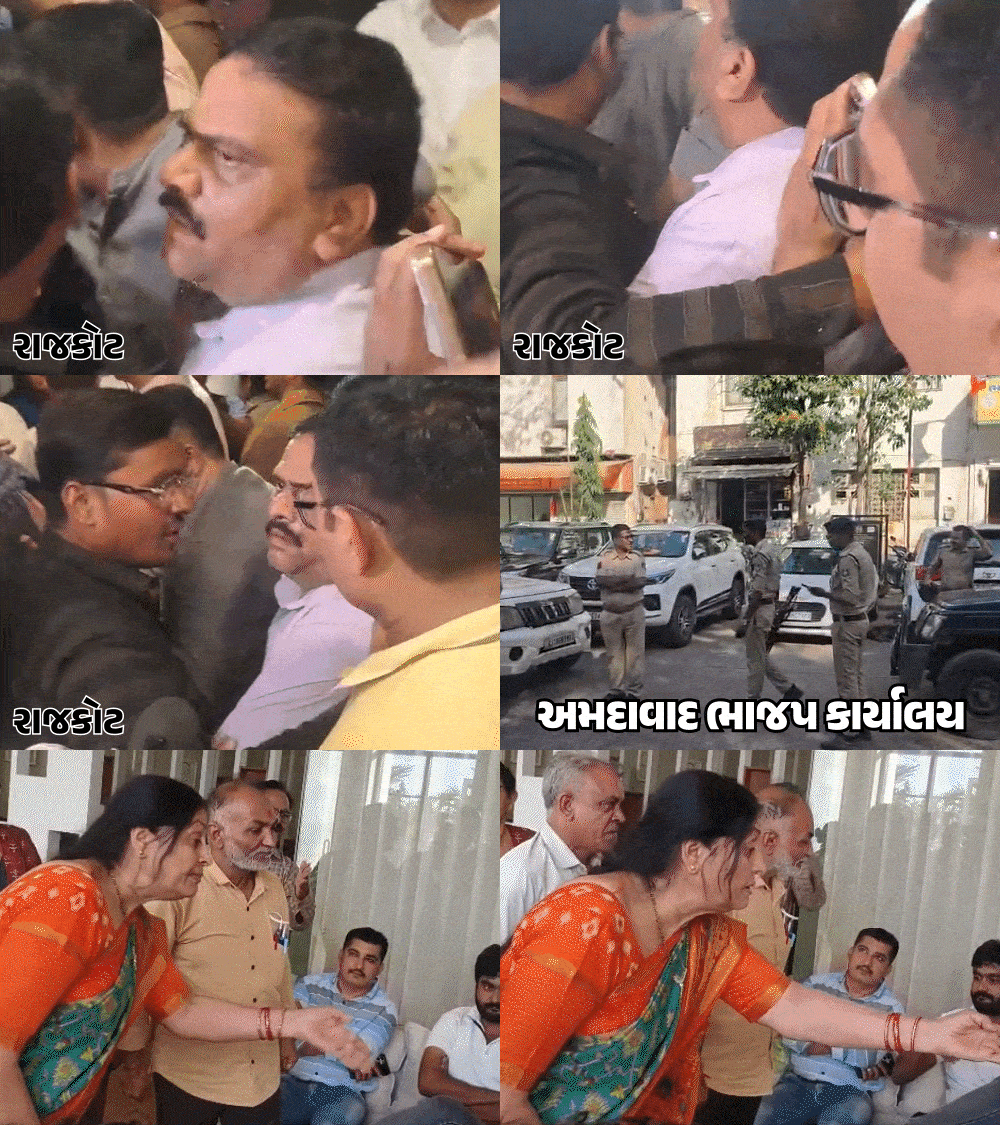
In Rajkot, a former city official named Nitin Ramani led a group of about 200 party workers to the BJP office. They were angry because he was not given a ticket to run in the election. The protest was so loud and intense that the police had to send the Crime Branch to keep order. In Ahmedabad, the party has started calling candidates to tell them they have been selected. So far, 42 people have received these calls, but this has triggered a wave of resignations in several areas.
One of the biggest problems is in the Chandkheda ward of Ahmedabad. Local workers are protesting because the party chose Yash Jadav, whose father recently joined the BJP from the Congress party. Local members feel that loyal workers who have been with the BJP for years are being pushed aside for newcomers. This led to the resignation of several local leaders, including the head of the Scheduled Caste unit in that area.
Important Numbers and Facts
The situation involves several cities and a large number of people. In Rajkot, 200 workers joined the protest at the main office. In Ahmedabad, 42 candidates have been officially notified by phone so far. In Surat, the situation is even more dramatic for other parties as well; around 500 active workers from the Aam Aadmi Party (AAP) left their group to join the Congress party after being unhappy with ticket choices. The most important date right now is the deadline for filing nomination forms, which is tomorrow. This has created a sense of hurry and pressure for all political parties involved.
Background and Context
Gujarat is often called a "laboratory" for the BJP because the party tries new political strategies there before using them in the rest of India. However, choosing candidates for local elections is always a difficult task. The party tries to balance different groups, ages, and backgrounds. This time, the party is trying to bring in fresh faces, but this often means leaving out older leaders who have served for a long time. When these veteran leaders are ignored, they and their followers feel disrespected, leading to the kind of public protests seen this week.
Public or Industry Reaction
The reaction from the ground has been emotional and loud. In Vadodara, a female leader named Vaishali Purohit broke down in tears after she was denied a ticket. She resigned from her position immediately. In another part of Vadodara, the husband of a candidate who was passed over announced on social media that his wife would run as an independent candidate on April 11. This shows that the anger is not just staying inside party offices but is moving to the public and social media. In Surat, the mass movement of 500 workers from AAP to Congress shows how quickly political loyalties can change when people feel unhappy with leadership decisions.
What This Means Going Forward
The next 24 hours are very important for the BJP leadership. They must decide whether to stick with their chosen candidates or change them to stop the protests. If they do not change the names, they risk more resignations and the possibility of "rebel" candidates who will fight against the party’s official choice. This could make the election much harder to win in certain wards. The Chief Minister and other top leaders are meeting constantly to find a solution that keeps the party united before the final papers are filed.
Final Take
While the BJP remains a very strong force in Gujarat, these internal fights show that even a powerful party can face trouble when its workers feel unheard. The use of police and the Crime Branch to handle political workers is a sign of how serious the tension has become. The party’s ability to win comfortably will depend on how well it can heal these wounds in the coming days. For now, the focus is on the clock, as the time to make final changes is running out.
Frequently Asked Questions
Why did the police go to the Rajkot BJP office?
The police and Crime Branch were called because a former official and 200 workers held a large protest after being denied election tickets, creating a tense situation at the office.
What is the main complaint of the workers in Ahmedabad?
Workers in areas like Chandkheda are upset because the party is giving tickets to the children of former Congress leaders instead of choosing long-time loyal BJP members.
When is the deadline for candidates to file their forms?
The final day for candidates to submit their official nomination forms for the election is tomorrow, which is why the protests and meetings have become so urgent.



