
Summary
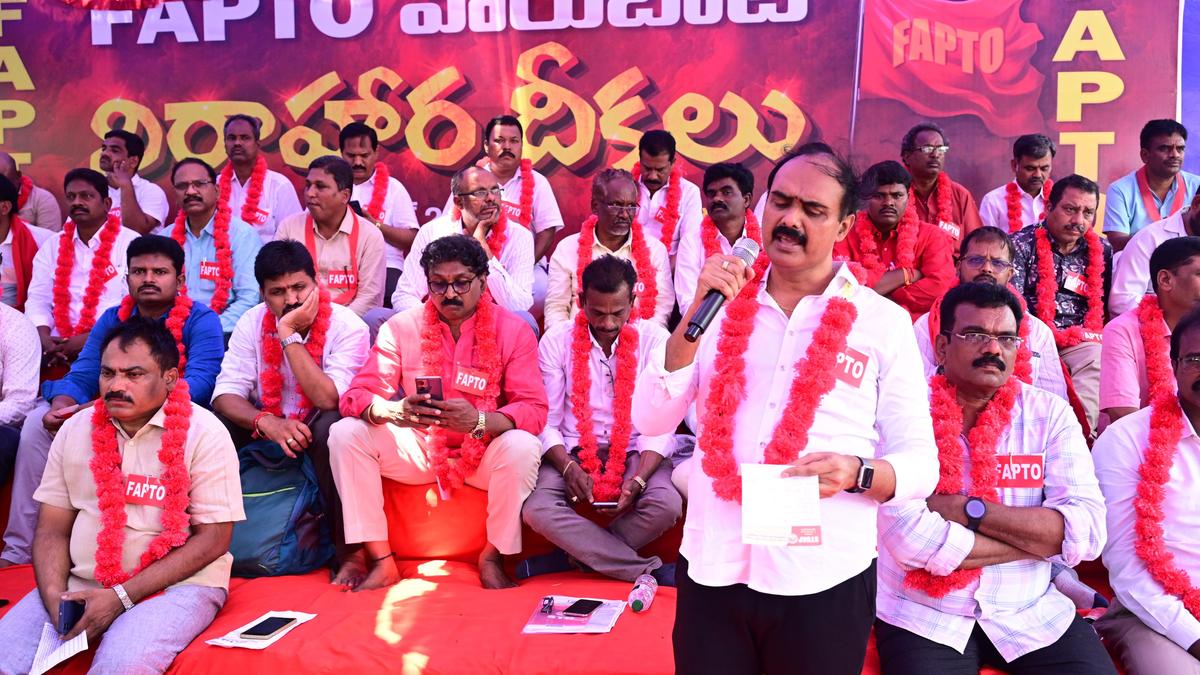
The hunger strike led by the Federation of Andhra Pradesh Teachers’ Organizations (FAPTO) has entered its second day in Vijayawada. Teachers from across the state have gathered to demand the fulfillment of long-standing promises made by the government. The protest focuses on financial arrears, pension reforms, and better working conditions for educators. As the strike continues, the pressure on the state administration to address these grievances is growing.
Main Impact
This protest is a significant move that could disrupt the regular functioning of government schools if a resolution is not reached soon. By choosing a hunger strike, the teachers are highlighting their desperation regarding unpaid dues and pension security. The movement has gained support from various employee unions, creating a unified front against the current state policies. If the government remains silent, the leaders have warned of more intense protests that could involve thousands of more staff members across Andhra Pradesh.
Key Details
What Happened
On the second day of the protest at Dharna Chowk in Vijayawada, several senior leaders of FAPTO continued their fast. Despite the heat and physical strain, the participants remained firm in their resolve. They sat with banners and placards, chanting slogans against the delay in releasing their financial benefits. Local police have been deployed to monitor the situation, but the protest has remained peaceful so far. Many teachers who are not on the fast have also joined the site to show their solidarity with their leaders.
Important Numbers and Facts
The teachers have listed several specific demands that involve large sums of money and policy changes. Key figures and facts include:
- The demand for the immediate release of 12 installments of Dearness Allowance (DA) that have been pending for a long time.
- The total cancellation of the Contributory Pension Scheme (CPS), which affects over 180,000 government employees in the state.
- The clearance of pending bills related to the Provident Fund (PF) and Group Life Insurance (GLI), which have been stuck in the treasury for months.
- A request to scrap the recently introduced Guaranteed Pension Scheme (GPS) and return to the Old Pension Scheme (OPS).
Background and Context
The tension between the teachers and the state government is not new. Before the last elections, the current administration promised to abolish the Contributory Pension Scheme (CPS). Teachers prefer the Old Pension Scheme (OPS) because it provides a fixed monthly income after retirement without requiring employees to invest their own money into market-linked funds. However, instead of bringing back the OPS, the government introduced the Guaranteed Pension Scheme (GPS). Teachers argue that the GPS does not offer the same level of security as the old system.
Additionally, the state has been facing financial challenges, leading to delays in paying salaries and other benefits. Teachers say they are struggling to manage their household expenses because their hard-earned money, such as PF withdrawals and medical reimbursements, is not being released on time. This hunger strike is the result of months of failed talks and ignored representations.
Public or Industry Reaction
The reaction from the teaching community has been one of strong support. Social media is filled with messages backing the FAPTO leaders. Other government employee associations have also expressed their sympathy, noting that they face similar financial delays. On the other hand, some government officials have stated that the state is doing its best to manage the budget and that the GPS is a fair middle ground between the old and new systems. However, this explanation has not satisfied the protesters, who feel that their retirement future is at risk.
What This Means Going Forward
If the hunger strike continues without a response from the Chief Minister or the Education Minister, FAPTO plans to call for a state-wide protest. This could include a "Chalo Vijayawada" program where thousands of teachers would march to the city. Such an event would likely lead to school closures and a standoff with law enforcement. The government now faces a choice: they can invite the union leaders for a fresh round of talks with concrete solutions, or they can risk a larger strike that could impact the academic calendar and public services.
Final Take
The hunger strike in Vijayawada is more than just a protest over money; it is a fight for the dignity and future security of educators. Teachers are the backbone of the state's development, and their ongoing frustration signals a deep rift that needs urgent healing. A quick and fair resolution is necessary to ensure that the focus returns to the classrooms rather than the protest grounds. The government must act fast to prevent this local strike from turning into a state-wide crisis.
Frequently Asked Questions
Why are the teachers on a hunger strike?
They are protesting because the government has not fulfilled its promise to cancel the Contributory Pension Scheme (CPS) and has delayed the payment of several financial dues like Dearness Allowance and Provident Fund bills.
What is the difference between OPS and GPS?
The Old Pension Scheme (OPS) provides a fixed pension based on the last salary drawn, while the Guaranteed Pension Scheme (GPS) is a newer model that teachers feel does not provide the same level of financial safety as the old system.
Will schools be closed because of this protest?
Currently, schools remain open as only union leaders are on a hunger strike. However, if the government does not address their demands, the unions may call for a full strike, which could lead to school closures.

