Summary
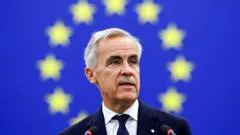
The European Union has officially rejected demands from Donald Trump to join a military effort against Iran. European leaders stated clearly that they will not be pulled into a conflict they did not start and do not support. This decision comes as the United States pressures its allies to help reopen the Strait of Hormuz, a vital route for the world’s oil supply. High Representative Kaja Kallas emphasized that Europe is not part of this war and questioned the political reasons behind the current fighting.
Main Impact
This disagreement marks a major split between the United States and its European allies. By refusing to join the military action, the European Union is trying to protect its own interests and avoid a larger war in the Middle East. However, the conflict is already causing serious problems for the rest of the world. Global stability is shaking, and the cost of energy is rising quickly. Because the Strait of Hormuz is currently blocked or unsafe, the flow of oil has slowed down, which makes gas and electricity more expensive for everyone.
Key Details
What Happened
Donald Trump recently called on NATO members and other European allies to provide military support in the Middle East. His goal is to use force to reopen the Strait of Hormuz, which has been caught in the middle of a growing conflict with Iran. In response, Kaja Kallas, who handles foreign policy for the EU, gave a very direct answer. She stated that Europe did not start this war and will not participate in it. She also mentioned that the reasons for the war are not clear, suggesting that the EU does not agree with the American approach to the situation.
Important Numbers and Facts
The Strait of Hormuz is one of the most important places in the world for the economy. About 20% of all the oil used across the globe passes through this narrow waterway. When this route is blocked, it creates an immediate shortage, which drives up prices at the pump. The current conflict has been going on for three weeks, and hopes for a quick peace deal are fading. As the fighting continues, the risk to global trade grows every day that the strait remains restricted.
Background and Context
The tension between the United States and Iran has been building for a long time, but it recently turned into an open conflict. The U.S. government under Donald Trump has taken a very aggressive stance, leading to the current military situation. For Europe, this is a difficult position. On one hand, European countries rely on the oil that comes through the Middle East. On the other hand, they do not want to get involved in a long and costly war that could lead to more violence within their own borders or a total break in diplomatic relations with other nations.
In the past, Europe has often tried to use talk and diplomacy to solve problems with Iran. They prefer to use rules and agreements rather than ships and bombs. By saying "this is not our war," the EU is reminding the world that they have their own foreign policy that is separate from what the United States wants.
Public or Industry Reaction
The reaction to this news has been mixed. Many people in Europe are relieved that their leaders are not rushing into a new war. They worry about the human cost and the potential for terror attacks if the conflict spreads. However, business leaders and energy companies are very concerned. They fear that if the Strait of Hormuz stays closed, the economy could fall into a recession. In the United States, the reaction from the Trump administration has been one of anger, as they expected their allies to follow their lead without question.
What This Means Going Forward
The next few weeks will be critical for global safety and the economy. If the EU continues to stay out of the fight, the United States may have to decide whether to act alone or find a way to talk to Iran. There is a high risk that energy prices will continue to climb, which will make life harder for families and small businesses. The EU is currently looking for ways to help reopen the trade routes using non-military means, but it is not yet clear if that will work. We can expect more tension within NATO as the U.S. and Europe struggle to agree on a shared plan.
Final Take
Europe is standing its ground and refusing to be forced into a conflict it does not believe in. While this keeps European soldiers out of the line of fire for now, the economic pressure from rising oil prices will be a major challenge for every government involved. The world is watching to see if diplomacy can win over military force.
Frequently Asked Questions
Why is the Strait of Hormuz so important?
It is a narrow path in the ocean where one-fifth of the world's oil travels. If it is closed, oil cannot reach many countries, causing prices to go up everywhere.
Why is the EU refusing to help the US?
European leaders believe the war was started without a clear plan or clear reasons. They want to avoid getting involved in a violent conflict that they did not create.
How does this affect regular people?
The main effect is the cost of living. As long as the conflict continues and the shipping routes are blocked, the price of gasoline, heating, and goods will likely increase.