
Summary
A major scientific discovery in Egypt is changing how we understand the history of human beings. For a long time, experts believed that the earliest ancestors of humans mostly lived and evolved in East and South Africa. However, new fossil evidence found in the Egyptian desert suggests that North Africa was a central hub for early primate evolution. This find is forcing scientists to rethink the map of where our story truly began.
Main Impact
The biggest impact of this discovery is that it shifts the focus of global research. For decades, the search for the "cradle of humanity" was limited to a few specific regions. By finding vital clues in Egypt, researchers now realize they may have been overlooking a massive part of the puzzle. This discovery suggests that the early ancestors of both humans and apes were much more widespread across the African continent than previously thought. It opens up new areas for exploration that were once ignored by fossil hunters.
Key Details
What Happened
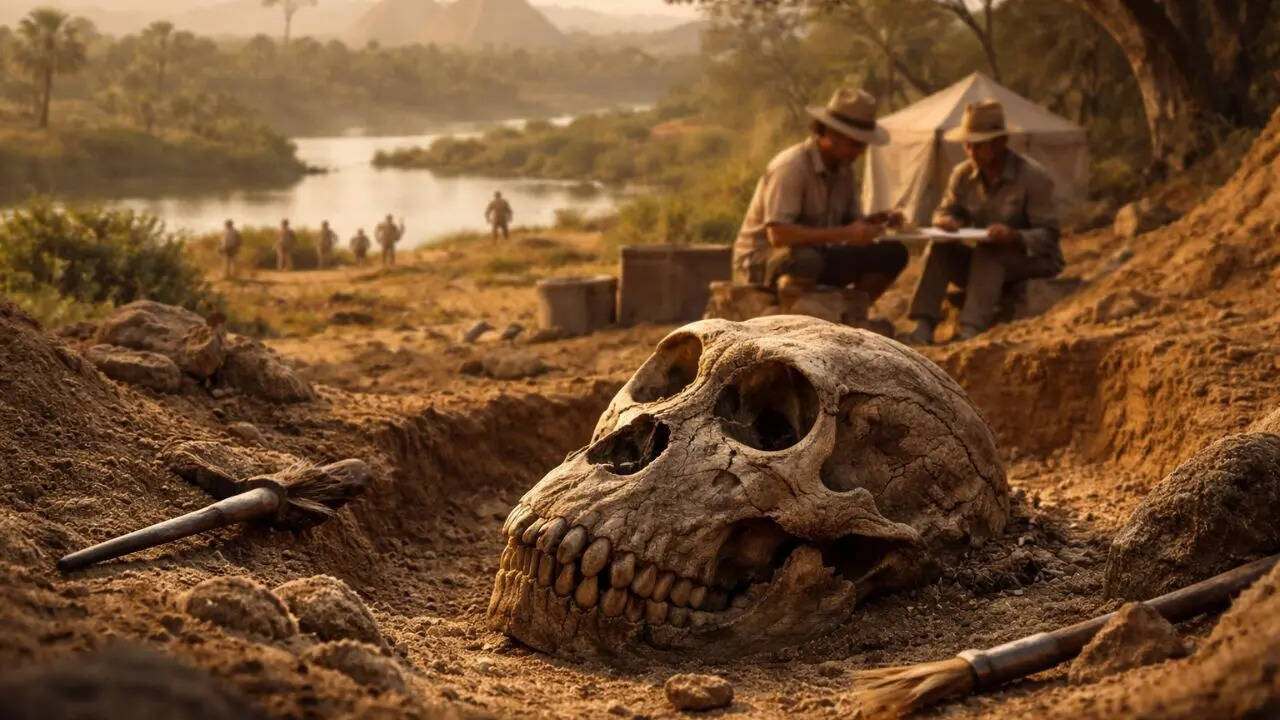
Paleontologists working in a region of Egypt known as the Fayum Depression have uncovered a series of highly significant fossils. These remains belong to early primates called anthropoids. These creatures are very important because they are the common ancestors of monkeys, apes, and humans. The fossils were found in layers of earth that have remained undisturbed for millions of years. The quality of the bones and teeth found allows scientists to see exactly how these early creatures lived and what they ate.
Important Numbers and Facts
The fossils found in this Egyptian site date back approximately 30 to 34 million years. This time period is known as the Oligocene epoch. During this era, the world was undergoing major climate changes. The specific species found, such as Aegyptopithecus zeuxis, weighed roughly 13 to 15 pounds. While that may seem small, these creatures had physical traits that show the very beginning of the path toward human-like features. The site itself has provided hundreds of different fossil samples, making it one of the richest locations for studying early primate life in the world.
Background and Context
To understand why this matters, we have to look at how we usually talk about human origins. Most people have heard of "Lucy," the famous fossil found in Ethiopia. Because so many famous finds happened in East Africa, that region became the main focus for everyone studying evolution. Egypt, on the other hand, was mostly famous for its ancient pyramids and pharaohs, not for fossils that are millions of years old.
However, millions of years ago, the environment in Egypt was completely different. It was not a dry desert. Instead, it was a warm, wet forest with many rivers and lush plants. This kind of environment was perfect for early primates to grow and change. This new discovery proves that North Africa provided the right conditions for the ancestors of humans to thrive long before they moved to other parts of the world.
Public or Industry Reaction
The scientific community is very excited about these findings. Many experts say this is the evidence they needed to prove that human evolution was not just a local event in one part of Africa. Some researchers have noted that we have been "looking in the wrong place" by focusing so heavily on the East. While some stay cautious and want more evidence, most agree that the Fayum fossils are a "missing link" that helps explain how small primates eventually became the large-brained ancestors of humans. This has sparked a new interest in North African archaeology, with many teams planning new trips to the area.
What This Means Going Forward
Moving forward, this discovery will likely change what students learn in school about human history. It means that the timeline of our evolution might be older and more complex than we thought. Scientists will now spend more time searching the Sahara Desert for more clues. They want to find out if there are even older fossils buried under the sand. This could lead to a complete rewrite of the human family tree. It also reminds us that there are still many secrets hidden in the ground, even in places we think we already know well.
Final Take
This discovery in Egypt shows that the story of where we come from is still being written. By looking in new places and questioning old ideas, scientists are finding a much bigger and more interesting history for the human race. It proves that our ancestors were survivors who lived in many different environments across the vast continent of Africa. The sands of Egypt have given us a new way to look at our own past.
Frequently Asked Questions
Why is the Egyptian discovery so important?
It is important because it shows that early human ancestors lived in North Africa millions of years ago. This challenges the idea that evolution only happened in East or South Africa.
What kind of creatures were found in the fossils?
The fossils belong to early primates called anthropoids. These small, forest-dwelling animals are the ancient relatives of modern monkeys, apes, and humans.
Was Egypt always a desert where these fossils were found?
No. Millions of years ago, the area was a tropical forest with lots of water and trees. This environment allowed early primates to live and evolve before the area turned into a desert.

