
Summary
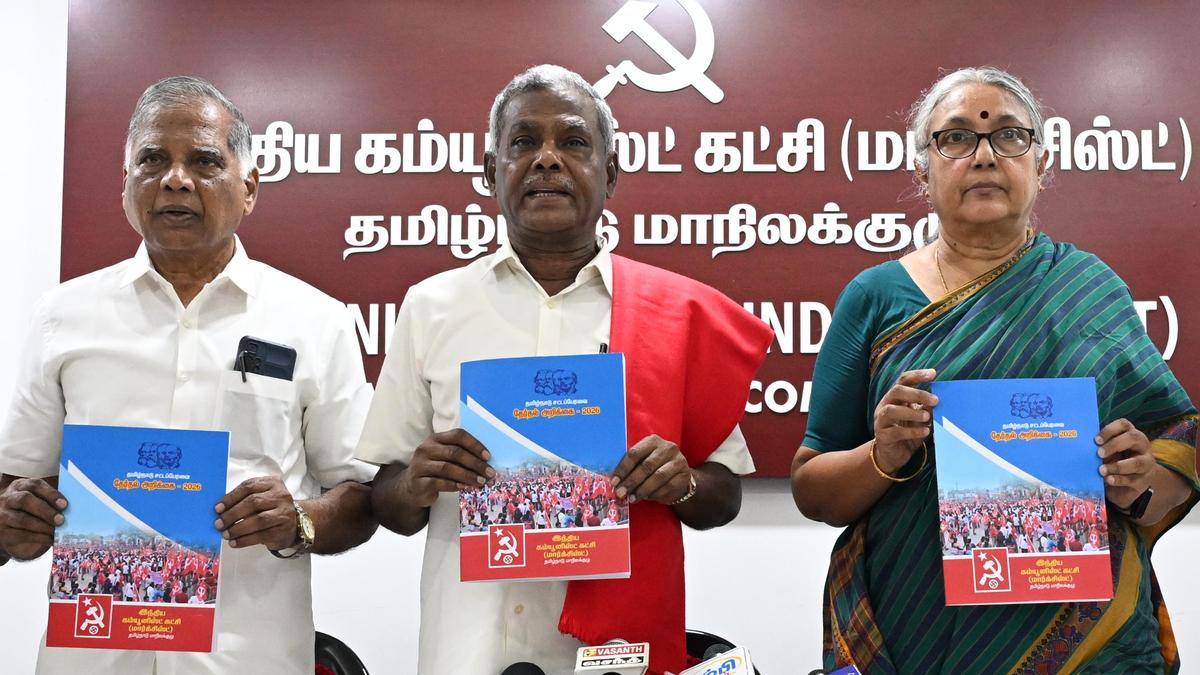
The Communist Party of India (Marxist), or CPI(M), in Tamil Nadu has released its official plan for the upcoming elections. This document, known as a manifesto, focuses on three main areas: changing how elections are held, giving more power to state governments, and protecting the rights of workers. The party is calling for big changes, such as removing the office of the Governor and ensuring that workers receive a much higher minimum wage. These proposals aim to shift power away from the central government and large corporations toward local leaders and everyday citizens.
Main Impact
The release of this manifesto marks a significant move in the political scene of Tamil Nadu. By focusing on "State Rights," the CPI(M) is tapping into a major local concern regarding how much control the central government in New Delhi should have. If these ideas were put into action, it would change the balance of power in India. It would give states like Tamil Nadu more control over their own money and laws. Additionally, the focus on labor rights could force other political parties to reconsider their own promises to the working class, especially regarding wages and job security.
Key Details
What Happened
The CPI(M) State Secretary, K. Balakrishnan, presented the party’s vision for the nation and the state. The party is part of a larger group of parties working together, but they wanted to highlight their specific goals. Their plan includes a total overhaul of the voting system. They want to move to a system called "proportional representation." In simple terms, this means that if a party gets 20% of the total votes, they should get 20% of the seats in parliament. This is different from the current system where the person with the most votes in a specific area wins, even if they don't have a majority of the total support.
Important Numbers and Facts
The manifesto includes several specific targets and demands that involve clear numbers and policy changes:
- Minimum Wage: The party wants to set a national minimum wage of at least ₹26,000 per month for all workers.
- Employment Guarantee: They propose increasing the number of guaranteed work days under the MGNREGA program from 100 days to 200 days per year.
- Wealth Tax: The plan suggests a new tax on the very wealthy. This would include a 1% wealth tax on the richest people in the country to help pay for social services.
- Women's Representation: The party is pushing for the immediate start of the law that gives 33% of seats in parliament and state assemblies to women.
- Education: They want to move education back to the "State List," which would give the Tamil Nadu government full control over schools and colleges, including the power to cancel the NEET exam for medical students.
Background and Context
To understand why these demands are being made, it is important to look at the current relationship between the central government and the states. In recent years, many leaders in Tamil Nadu have felt that the central government is taking away their power. One major point of conflict is the role of the Governor. In India, the Governor is appointed by the central government. In Tamil Nadu, the state government and the Governor have often disagreed on new laws, leading to delays. By asking to abolish the Governor's post, the CPI(M) wants to ensure that elected state leaders have the final say.
Furthermore, the party is concerned about the rising cost of living. They believe that current economic policies favor big businesses over small farmers and factory workers. This is why they are focusing so heavily on higher wages and more guaranteed work days. They see these measures as a way to reduce the gap between the rich and the poor.
Public or Industry Reaction
Labor unions and worker groups have generally welcomed the manifesto. They see the promise of a ₹26,000 minimum wage as a necessary step to fight inflation. Many teachers and students in Tamil Nadu also support the idea of removing the NEET exam, which has been a controversial topic in the state for years. However, some business leaders and economists have expressed concerns. They argue that a sudden, large increase in the minimum wage could be difficult for small businesses to afford. Others worry that taxing the super-rich might lead to less investment in the country's economy. Despite these debates, the manifesto has succeeded in making these issues a central part of the election conversation.
What This Means Going Forward
As the election approaches, the CPI(M) will use this manifesto to gather support from the working class and those who feel strongly about state pride. Even if the party does not win a majority on its own, these ideas will likely influence the bigger parties they are allied with. If the alliance wins, there will be pressure to follow through on at least some of these promises, such as increasing work days for rural laborers or changing how taxes are shared between the center and the states. The demand to remove the Governor's office will also remain a hot topic in Tamil Nadu politics for a long time.
Final Take
The CPI(M) manifesto is more than just a list of promises; it is a challenge to the current way of doing things in India. By focusing on the needs of the poor and the rights of the states, the party is trying to offer a different path for the country's future. Whether or not all these changes happen, the manifesto highlights the deep desire for a more balanced and fair system of government.
Frequently Asked Questions
What is proportional representation?
It is a voting system where the number of seats a party gets in the government is based on the total percentage of votes they receive across the whole country or state.
Why does the CPI(M) want to remove the Governor?
The party believes the Governor's office allows the central government to interfere with the decisions made by elected state leaders, which they feel is undemocratic.
What is the proposed minimum wage in the manifesto?
The CPI(M) is calling for a national minimum wage of ₹26,000 per month to help workers keep up with the rising cost of living.



