
Summary
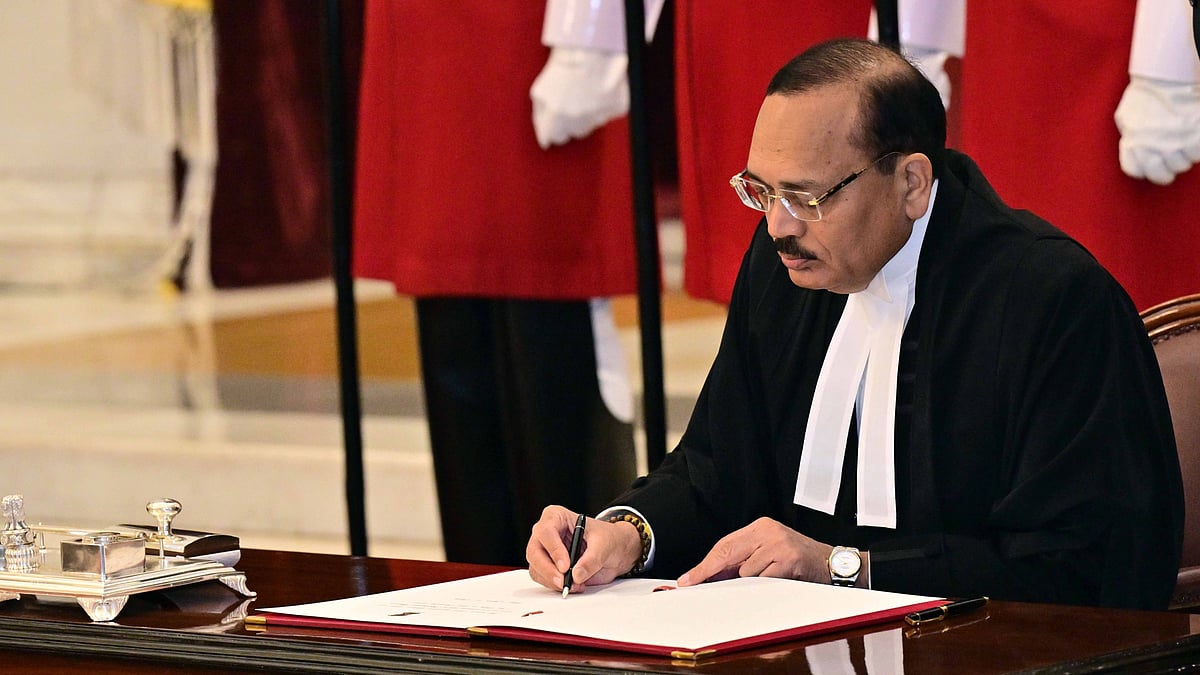
Chief Justice of India Surya Kant has decided to step away from a case involving how top election officials are chosen. The case looks at a 2023 law that changed the rules for appointing the Chief Election Commissioner and other commissioners. This law removed the Chief Justice from the selection team, and many people have challenged this change in court. By stepping down, the Chief Justice aims to avoid any appearance of a conflict of interest or unfairness.
Main Impact
The decision by the Chief Justice to recuse himself is a significant move for the legal system. It ensures that the court remains neutral while deciding a case that directly involves the role of the judiciary. Because the law in question removes the Chief Justice from a powerful committee, having the Chief Justice rule on it could look like he is protecting his own position. By moving the case to a different group of judges, the court is trying to keep the public's trust in its fairness.
Key Details
What Happened
On Friday, a bench led by Chief Justice Surya Kant was set to hear several petitions. These petitions argue that the 2023 law regarding election officials is not valid under the constitution. As soon as the hearing began, the Chief Justice announced he would not take part. He explained that since the case is about whether the Chief Justice should be on the selection panel, he has a personal connection to the outcome. He suggested that the case should be heard by judges who are not scheduled to become the Chief Justice in the future.
Important Numbers and Facts
The law being challenged was passed by Parliament in December 2023. Before this law, a special Supreme Court ruling in March 2023 had set up a temporary system. That system used a three-person committee: the Prime Minister, the Leader of the Opposition, and the Chief Justice of India. The new 2023 Act changed this. It replaced the Chief Justice with a Union Minister picked by the Prime Minister. This means the government now has two out of three votes on the selection panel. The next hearing for this case is now set for April 7, 2026.
Background and Context
The Election Commission of India is a very important body. It is responsible for making sure that elections in the country are free and fair. For a long time, there were questions about how the people running this commission were picked. Critics argued that if the government alone picks the election bosses, those bosses might favor the government during elections.
In early 2023, the Supreme Court stepped in. They said that until Parliament made a formal law, the Chief Justice must be part of the selection process to ensure balance. However, when Parliament finally passed the law later that year, they decided to leave the Chief Justice out. This move sparked a big debate about the "separation of powers" between the government and the courts. Groups like the Association for Democratic Reforms and leaders from the Congress party filed lawsuits to bring the Chief Justice back into the process.
Public or Industry Reaction
Lawyers and activists have praised the Chief Justice's decision to step aside. Prashant Bhushan, a well-known lawyer representing one of the groups, agreed that a neutral bench is necessary. He noted that it is better for the case to be handled by judges who do not have a direct stake in the office of the Chief Justice. On the other side, the central government has defended the new law. The Union Law Ministry argues that the Election Commission can be independent even without a judge on the selection panel. They claim that the new process is legal and follows the rules set by Parliament.
What This Means Going Forward
The case will now move to a new bench of judges on April 7. These judges will be carefully chosen so that none of them are in line to become the next Chief Justice. This is a rare and careful step to ensure total neutrality. The final decision on this case will determine who gets to control the appointment of election officials for years to come. If the court strikes down the law, the government might have to include the Chief Justice again. If the court upholds the law, the current three-person panel—dominated by the executive branch—will remain in charge.
Final Take
This situation highlights the ongoing tension between the government and the judiciary over who should oversee the democratic process. By stepping away, Chief Justice Surya Kant has put the integrity of the court above his own involvement in the case. The upcoming hearing in April will be a major moment for Indian democracy, as it will decide how much influence the government should have over the people who run the nation's elections.
Frequently Asked Questions
Why did the Chief Justice step down from the case?
He stepped down to avoid a conflict of interest. Since the case is about whether the Chief Justice should be part of a selection committee, he felt it would be unfair for him to judge the matter himself.
What is the main problem with the 2023 law?
Critics say the law gives the government too much power. By replacing the Chief Justice with a government minister, the government now has two votes on the three-person panel that picks election officials.
When will the court hear the case again?
The case is scheduled to be heard on April 7, 2026. It will be handled by a new group of judges who are not in line to become the Chief Justice of India.

