
Summary
The Indian government is currently in talks with the artificial intelligence company Anthropic regarding its latest AI model, known as Mythos. Officials from the Ministry of Electronics and Information Technology (MeitY) have expressed serious concerns about how this new technology might affect digital safety. S. Krishnan, the Secretary of MeitY, recently highlighted that the rise of advanced AI has turned cybersecurity risks into a very real and immediate threat. This dialogue marks a significant step in how the government plans to manage powerful AI tools that could be misused by bad actors.
Main Impact
The primary impact of this development is a shift in how India views global AI developers. Instead of just focusing on the benefits of new technology, the government is now looking closely at the dangers. The release of Mythos has forced a conversation about whether AI companies are doing enough to prevent their tools from being used for cyberattacks. If an AI can write code or find weaknesses in software, it could help hackers launch more effective attacks on banks, power grids, and government databases. By speaking directly to Anthropic, the Indian government is trying to set a standard for safety before these tools become widely used across the country.
Key Details
What Happened
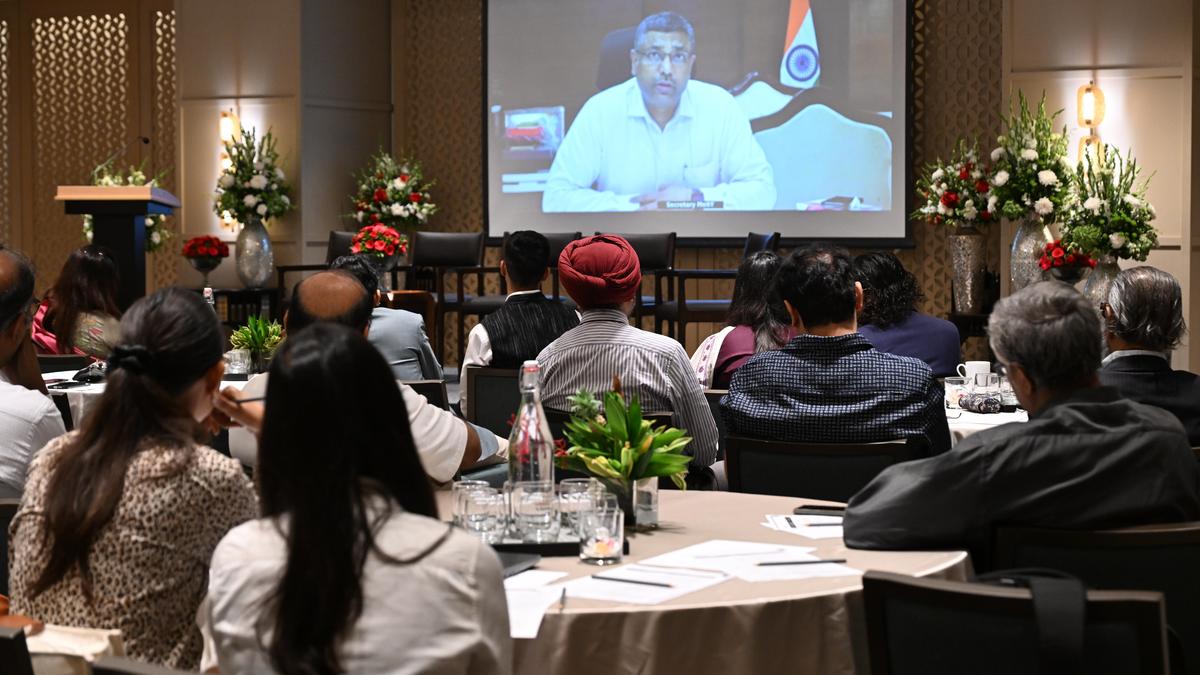
During a recent industry event, MeitY Secretary S. Krishnan confirmed that the government is actively communicating with Anthropic. The focus of these talks is the "Mythos" model, which is one of the most advanced AI systems recently made public. The government is worried that the capabilities of Mythos could be exploited to create malware or automate phishing scams. Krishnan noted that the threat is no longer theoretical; it is something that security experts are seeing in real-time. The government wants to understand the internal safety measures Anthropic has put in place to stop the AI from generating harmful content or helping with illegal activities.
Important Numbers and Facts
While specific technical data from the private talks has not been released, the context of the discussion is clear. India has seen a steady rise in cyber incidents over the past few years. Reports suggest that AI-driven attacks could increase the speed of hacking attempts by a large margin. Anthropic, a company valued at billions of dollars, is known for its focus on "AI safety," but the Indian government wants more transparency. The discussions are part of a broader effort by MeitY to create a framework for responsible AI use in India, which is home to one of the largest online populations in the world.
Background and Context
Artificial intelligence has grown very fast over the last few years. Companies like Anthropic, OpenAI, and Google are constantly releasing new models that can think, write, and code better than before. While these tools are helpful for students and businesses, they also have a dark side. Cybersecurity experts have warned that AI can be used to create "deepfakes" or to write computer viruses that are hard to detect. In simple terms, AI makes it easier for people who are not experts to carry out complex digital crimes. India is currently updating its technology laws, and the government wants to make sure that AI companies are held responsible for what their products can do.
Public or Industry Reaction
The tech industry has had mixed reactions to these government talks. Some experts believe that strict rules are necessary to protect the public. They argue that without government oversight, companies might prioritize profit over safety. On the other hand, some developers worry that too much regulation could slow down innovation. They fear that if India makes it too hard for AI companies to operate, the country might fall behind in the global tech race. However, the general feeling among cybersecurity professionals is one of relief, as they have been calling for better protections against AI-assisted hacking for a long time.
What This Means Going Forward
Moving forward, we can expect the Indian government to introduce new guidelines for AI companies. These might include "stress tests" where the government or independent groups try to break an AI's safety rules before it is allowed to launch in India. There may also be requirements for companies to report any "jailbreaking" attempts, where users try to trick the AI into doing something dangerous. For Anthropic, this means they will have to prove that Mythos is safe for the Indian market. For the average user, it means that the government is trying to make the internet a safer place, even as technology becomes more complex.
Final Take
The conversation between the Indian government and Anthropic is a clear sign that the era of unregulated AI is coming to an end. As tools like Mythos become more powerful, the risks to national security and personal privacy grow. By addressing these concerns now, the government is trying to find a balance between using new technology and keeping its citizens safe from digital harm. It is a difficult task, but it is necessary for a secure digital future.
Frequently Asked Questions
What is Mythos?
Mythos is a new artificial intelligence model developed by the company Anthropic. It is designed to be highly capable at complex tasks, but its power has raised concerns about potential misuse in cybersecurity.
Why is the Indian government worried about AI?
The government is worried that advanced AI can be used by hackers to find security flaws, write malicious software, and launch automated attacks on important digital systems.
What is MeitY?
MeitY stands for the Ministry of Electronics and Information Technology. It is the branch of the Indian government responsible for managing tech policy, internet safety, and the digital economy.



