
Summary
Residents across Andhra Pradesh are facing significant challenges as fuel stations struggle to maintain steady supplies of petrol and diesel. While the state government and major oil companies claim there is enough fuel for everyone, the situation on the ground tells a different story. Many people are waiting in long lines for hours, and some stations have stopped selling fuel entirely. This mismatch between official statements and the daily reality has caused widespread worry among commuters and business owners.
Main Impact
The current fuel situation is causing a major disruption to daily life and the local economy. When fuel becomes hard to find, it does more than just slow down cars; it affects the entire supply chain. Delivery drivers, public transport operators, and farmers are finding it difficult to plan their work. In many cities, the sight of long lines at the few open stations has led to a sense of panic. This panic often makes the problem worse, as people try to buy more fuel than they normally need, which drains the remaining stock even faster.
Key Details
What Happened
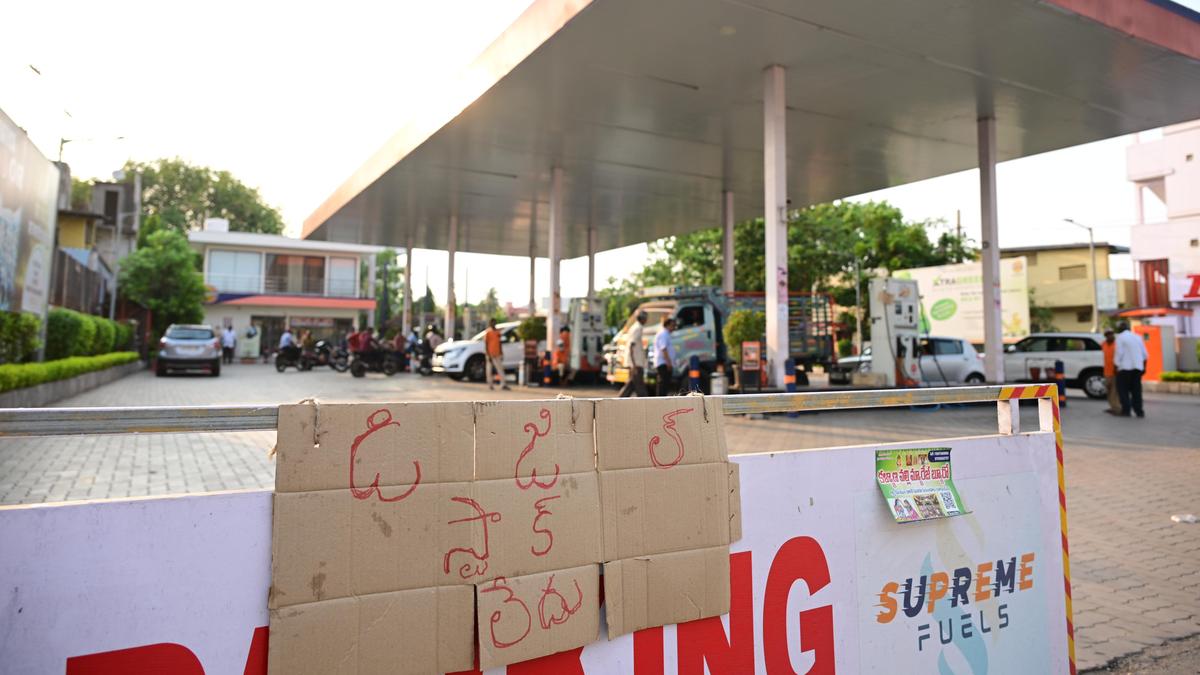
In the past few days, several major cities in Andhra Pradesh have reported issues with fuel availability. Drivers have found many filling stations with their gates closed or signs saying they are out of stock. At the stations that remain open, workers are often limiting how much fuel a single person can buy. This is known as restricted sales. Instead of filling up their tanks, drivers are told they can only buy a small amount to ensure there is enough for others. This has led to frustration and long wait times that stretch down the streets.
Important Numbers and Facts
The problem is not limited to just one area but is spread across several large urban centers. The cities most affected include Vijayawada, Guntur, Tirupati, Rajahmundry, Eluru, Kakinada, and Kurnool. In these locations, queues at petrol pumps have been described as "serpentine," meaning they wind around corners and block traffic. While oil marketing companies insist that their storage tanks are full, the actual delivery of that fuel to local pumps seems to be hitting a bottleneck. Some reports suggest that private fuel stations are more affected than those run by the government, leading to even more pressure on state-owned outlets.
Background and Context
Fuel is the backbone of movement in any state. In Andhra Pradesh, millions of people rely on two-wheelers and cars to get to work, while trucks move essential goods like food and medicine. Usually, fuel supply is a smooth process where tankers deliver fresh stock to stations every day. However, when there is a delay in this process—whether due to payment issues, transport strikes, or maintenance at refineries—it quickly leads to a shortage at the pump. Even a small delay can cause big problems because most stations only keep enough fuel for a day or two of normal sales. When the public hears rumors of a shortage, they rush to the pumps, and the system cannot keep up with the sudden high demand.
Public or Industry Reaction
The reaction from the public has been one of deep concern and anger. Many office workers have reported being late because they had to spend their morning searching for an open petrol pump. On social media, residents are sharing photos of "No Stock" boards to warn others. Transport unions have also expressed worry, noting that if the situation does not improve, the cost of moving goods will go up, which could lead to higher prices for groceries. Meanwhile, oil company officials continue to ask the public not to panic, promising that more tankers are on the way. However, these promises have not yet been enough to shorten the lines or calm the nerves of the people waiting in the heat.
What This Means Going Forward
Looking ahead, the government needs to bridge the gap between their reports and what people are seeing at the stations. If the supply is truly available, the focus must shift to how that fuel is moved from storage centers to the cities. Better communication is also needed to prevent panic buying. If people feel confident that fuel will be available tomorrow, they will stop trying to hoard it today. In the coming weeks, officials will likely monitor the stock levels at private stations more closely to see if they are intentionally holding back fuel or if they truly cannot get supply from the main companies.
Final Take
The fuel tension in Andhra Pradesh highlights how quickly daily life can be shaken when essential resources become hard to get. While the government says there is no shortage, the long lines and closed gates suggest a serious problem with how fuel is being distributed. Solving this will require more than just words; it will require a steady and visible flow of fuel to every corner of the state to restore public trust and keep the economy moving.
Frequently Asked Questions
Is there a total fuel strike in Andhra Pradesh?
No, there is no official strike. The issues are related to supply delays and restricted sales at certain stations, which has caused long lines at others.
Which cities are most affected by the fuel lines?
The most affected cities include Vijayawada, Guntur, Tirupati, Rajahmundry, Eluru, Kakinada, and Kurnool.
Why are some stations limiting how much fuel I can buy?
Stations limit sales to make sure their limited stock lasts longer and to prevent a few people from buying all the available fuel during a period of high demand.

