
Summary
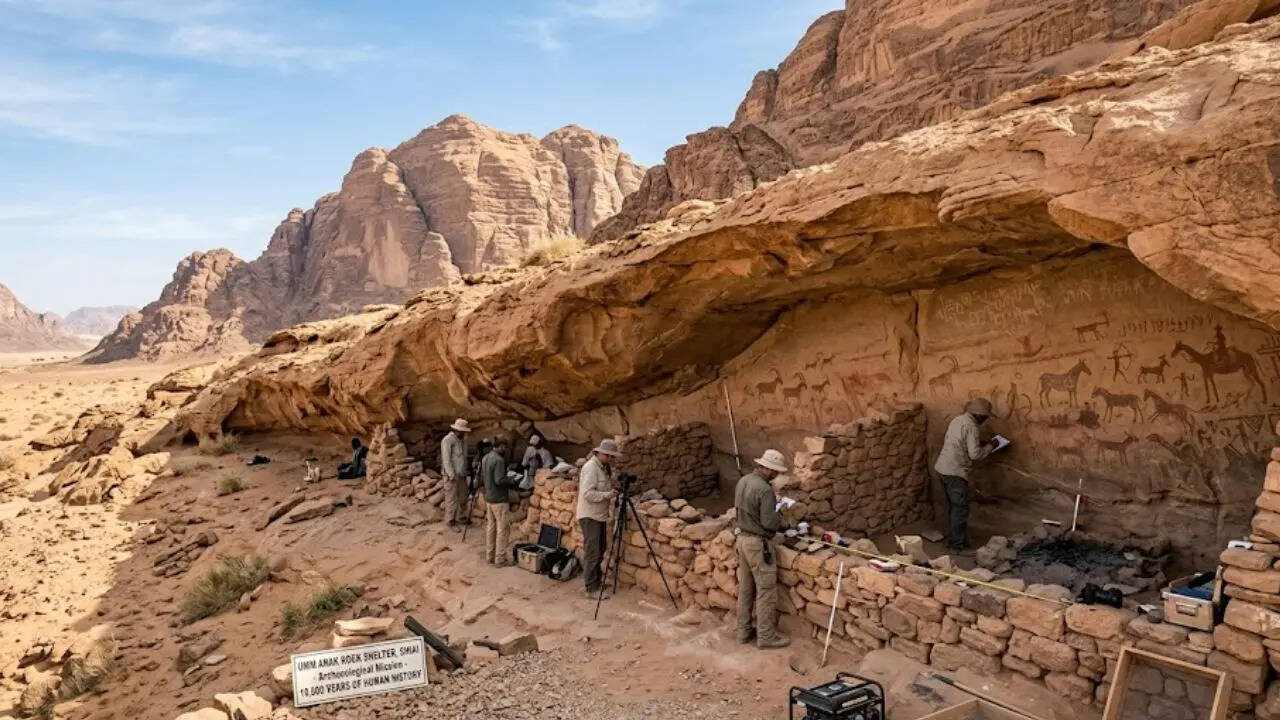
Archaeologists in Egypt have uncovered a massive rock wall that acts as a giant history book made of stone. This 100-meter-long sandstone cliff contains carvings that span over 10,000 years of human history. The site shows the transition from early hunter-gatherers to the organized society of the Pharaohs. By studying these images, experts can see how people, animals, and the environment changed over thousands of years in a single location.
Main Impact
The discovery of this rock wall provides a rare, continuous look at how human culture grew in North Africa. Instead of showing just one moment in time, the carvings offer a timeline that connects the Stone Age to the early days of Ancient Egypt. This helps scientists understand how early humans moved across the land and how they began to form the religious and social ideas that later built the pyramids. It proves that the desert areas near the Nile were active centers of life long before the famous kings took power.
Key Details
What Happened
Researchers working near the city of Aswan found a long stretch of sandstone covered in ancient art. The carvings were made by different groups of people over many generations. The oldest drawings date back to a time when the area was much wetter and greener than it is today. As the climate changed and the land became a desert, the style of the art changed too. The wall features hundreds of images, including wild animals, human figures, and strange symbols that represent early spiritual beliefs.
Important Numbers and Facts
The rock wall measures approximately 100 meters in length, making it one of the largest sites of its kind in the region. The carvings cover a period of roughly 10,000 years, starting from the late Stone Age (Epipaleolithic) and continuing through the Predynastic period into the early years of the Egyptian state. Among the images, archaeologists identified animals that are no longer found in Egypt, such as giraffes, elephants, and crocodiles. There are also depictions of early boats, which show how important the Nile River was even in the very distant past.
Background and Context
To understand why this discovery is so important, it helps to know what Egypt looked like thousands of years ago. Long before the time of King Tut or the Great Sphinx, the Sahara was not a complete desert. It had grasslands and lakes that supported large animals and groups of wandering hunters. Over time, the earth’s tilt changed, and the rains stopped falling. This forced people to move closer to the Nile River to survive.
This rock wall is located in a spot where these early people would gather. It served as a permanent record of their lives. By looking at the layers of carvings, experts can see the exact moment when people stopped hunting wild animals and started keeping cattle. They can also see the beginning of Egyptian art styles, such as the way humans are drawn with broad shoulders and thin waists, which became a standard for thousands of years afterward.
Public or Industry Reaction
Historians and archaeologists are calling this site a "library of stone." Many are impressed by how well the carvings have survived despite being exposed to the wind and sun for so long. Experts in ancient art note that the site is unique because it shows a clear progression of skills. You can see the difference between the rough, simple lines of the earliest hunters and the more detailed, confident work of the later artists who lived just before the first Pharaohs.
Local authorities in Egypt are also looking at how to protect the site. Because it is so large and located in an open area, there are concerns about erosion or damage from modern activity. There is a push to use high-tech digital scanning to create a 3D map of every carving so that the information is saved forever, even if the rock itself eventually wears away.
What This Means Going Forward
This discovery will likely lead to more searches in the surrounding desert. If one 100-meter wall exists, there may be others hidden under the sand or in remote valleys. It also changes the way museums will tell the story of Egypt. Instead of starting the story with the first kings, they can now show a much longer history of human struggle and creativity.
In the coming years, researchers will focus on dating each specific carving more accurately. They want to match the animal drawings with climate records to see exactly when certain species disappeared from the area. This will help scientists understand how modern climate change might affect people living in dry regions today.
Final Take
The 100-meter rock wall is more than just ancient art; it is a witness to the birth of a civilization. It shows that the roots of Ancient Egypt go much deeper than the gold and monuments we usually see in movies. By looking at these simple stone carvings, we get a clear view of how our ancestors survived, adapted, and eventually built one of the greatest cultures in human history.
Frequently Asked Questions
How old are the oldest carvings on the wall?
The oldest carvings are estimated to be about 10,000 years old, dating back to the late Stone Age when the region had a much different climate.
What kind of animals are shown in the rock art?
The wall features drawings of giraffes, elephants, crocodiles, and cattle. These images show that the area once had enough water and grass to support large wildlife.
Where exactly is this rock wall located?
The site is located in the desert areas near Aswan, Egypt, along sandstone cliffs that provided a perfect surface for ancient artists to carve their stories.

