
Summary
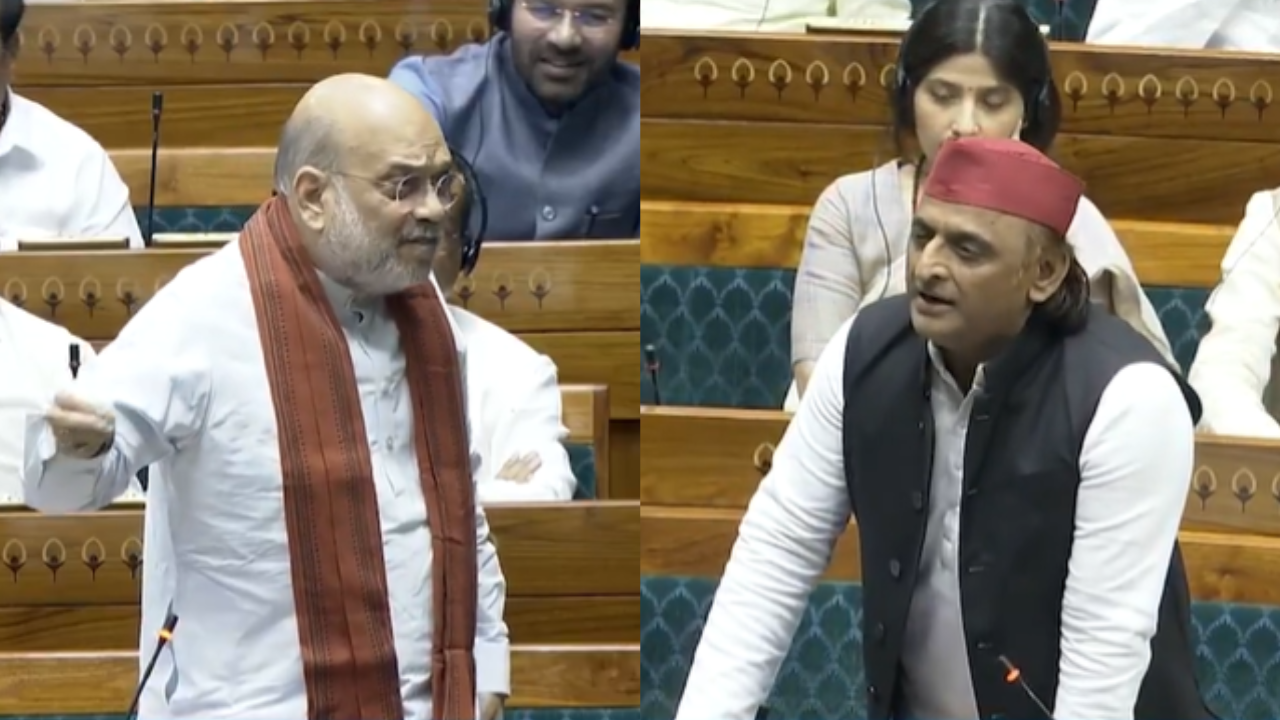
Home Minister Amit Shah and Samajwadi Party leader Akhilesh Yadav recently had a heated debate in the Lok Sabha. The main topic of their disagreement was the Women’s Reservation Bill and how it should be put into action. Akhilesh Yadav questioned why the government is moving forward without a new Census and demanded a count based on caste. Amit Shah responded by saying that a caste census would happen after the regular Census, but he firmly stated that giving reservations based on religion is against the Indian Constitution.
Main Impact
This clash highlights a major divide in Indian politics regarding how seats in Parliament should be shared. While most parties agree that women need more representation, they disagree on the specific rules for who gets those seats. The debate brings the issue of a caste census back to the center of national discussion. It also reinforces the government's stance that they will not allow quotas for religious groups, which could have a big effect on future election strategies and how different communities vote.
Key Details
What Happened
The argument started during a session in the Lok Sabha where leaders were discussing the Women’s Reservation Bill. Akhilesh Yadav, representing the Samajwadi Party, stood up to ask about the timing of the bill. He wanted to know why the government was in such a hurry to pass it when the official Census has not been updated yet. Yadav argued that without a proper count of different castes, the reservation would not be fair to everyone. He specifically called for a "caste-based enumeration" to ensure that women from backward classes also get their fair share of seats.
Amit Shah, representing the government, answered these concerns directly. He explained that the process of counting the population is a massive task that must follow a specific order. He assured the House that the government is not ignoring the demand for a caste census but said it would take place after the current Census process is finished. The most striking part of his speech was his firm reminder that the Constitution of India does not allow for reservations based on a person's religion.
Important Numbers and Facts
The Women’s Reservation Bill, also known as the Nari Shakti Vandan Adhiniyam, aims to reserve 33 percent of seats in the Lok Sabha and state assemblies for women. However, this change cannot happen immediately. According to the law, the seats can only be redistributed after a new Census is completed and a process called "delimitation" is carried out. The last official Census in India was done in 2011. The 2021 Census was delayed because of the global health crisis. This delay is what caused the tension between the two leaders, as the opposition feels the government is using the delay to avoid certain social questions.
Background and Context
To understand why this debate is so important, it helps to know what "delimitation" and "census" mean in this context. A Census is a complete count of every person living in the country. It collects data on where people live, their jobs, and their education. Delimitation is the process of redrawing the boundaries of voting areas so that each representative stands for a similar number of people. Because the population grows at different rates in different places, these boundaries must be updated every few years.
The Women’s Reservation Bill has been a topic of discussion for decades. While it was finally passed, the actual implementation depends on these two processes. The opposition parties, like the Samajwadi Party, worry that without a caste census, the 33 percent reservation will mostly benefit women from higher-income or more privileged backgrounds. They want a "quota within a quota" to make sure women from Other Backward Classes (OBC) are included. The government, on the other hand, says they are following the legal path set by the Constitution.
Public or Industry Reaction
The reaction to this clash has been split along party lines. Supporters of the government praise Amit Shah for sticking to constitutional values and refusing to divide the country based on religion. They believe the government is being practical by waiting for the Census. On the other side, supporters of the opposition and various social activists agree with Akhilesh Yadav. They feel that a caste census is the only way to ensure true social justice. Many people on social media have been discussing whether the delay in the Census is a political move or a simple administrative necessity.
What This Means Going Forward
The path to giving women 33 percent of seats in Parliament is still a few years away. First, the government must conduct the long-awaited Census. After that, a commission will be formed to redraw the voting districts across India. This process is expected to be complicated and might lead to more debates between different states, especially between the North and the South. The government’s refusal to allow religion-based reservation also sets a clear boundary for future legal battles. We can expect the demand for a caste census to remain a major talking point in the next general elections.
Final Take
The debate between Amit Shah and Akhilesh Yadav is more than just a political argument; it is a look at the different visions for India's future. One side focuses on following the established constitutional rules and waiting for official data. The other side pushes for immediate social changes and more detailed data on caste. While the Women’s Reservation Bill is a historic step, the real work of making it happen will require a lot of patience and many more difficult conversations in Parliament.
Frequently Asked Questions
Why is the Census important for women's reservation?
The Census provides the official population numbers needed to redraw voting districts. The law says that women's reservation can only start after this redrawing process, called delimitation, is finished using the new Census data.
What is a caste census?
A caste census is a count of the population that also records which specific caste each person belongs to. Some political leaders believe this data is necessary to make sure government benefits and reservations are distributed fairly among all groups.
Is religion-based reservation allowed in India?
According to the Indian Constitution and statements made by government leaders like Amit Shah, reservations based solely on religion are considered unconstitutional. Reservations are generally based on social and educational backwardness rather than faith.



