
By Newsroom Desk | Business
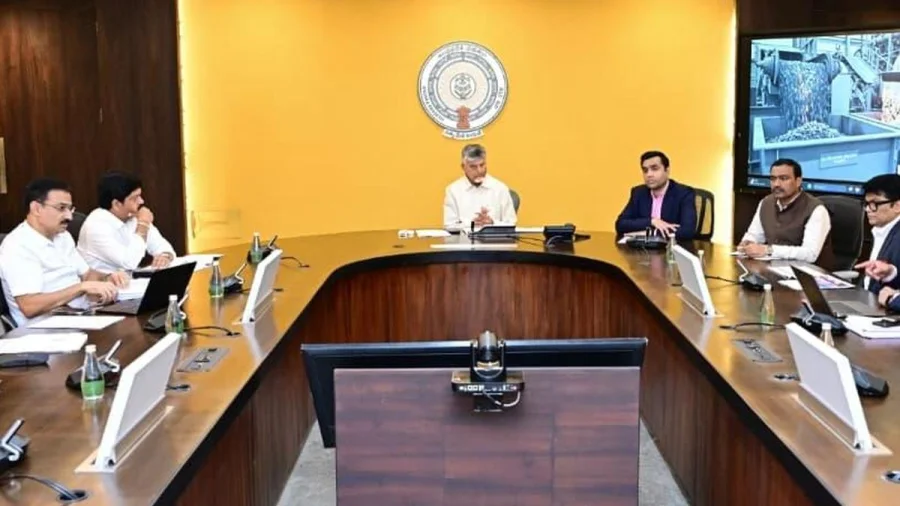
Srikakulam’s coastline has long been known for mineral-rich sands. But the conversation now is not just about digging them out — it is about refining them into far more valuable industrial inputs. That is the message from Andhra Pradesh Chief Minister N. Chandrababu Naidu as the Adani Group briefs him on a ₹16,000 crore titanium plant proposed in the district.
Adani Group presents ₹16,000 crore titanium plant proposal
According to the original report, the Adani Group briefed CM Naidu about a proposed titanium plant in Srikakulam district, entailing an investment of ₹16,000 crore. Specific details on project capacity, land requirement, and construction timeline have not yet been disclosed.
Naidu’s response, as stated in the original story, was a call for value addition to beach sand minerals. This suggests the state government wants the minerals processed locally rather than being shipped out in raw form.
Value addition in sand: Why Naidu wants minerals processed locally
Beach sand minerals such as ilmenite, rutile, zircon, and monazite are used in products ranging from titanium dioxide pigments to aerospace alloys and ceramics. Exporting raw sand captures only a fraction of the value compared to processing it into refined industrial materials.
By pushing for value addition, Naidu is signalling that Andhra Pradesh wants to be part of the higher-value manufacturing chain, creating more revenue and more jobs within the state.
What the Srikakulam titanium project could mean locally
A titanium plant of this scale could bring substantial industrial investment to a district that has historically seen lower industrialisation than other parts of Andhra Pradesh. If realised, it could create direct and indirect employment, attract ancillary suppliers, and improve local infrastructure.
However, these outcomes depend heavily on project execution, including land acquisition, environmental clearances, and community engagement.
Official details still awaited
So far, no formal government statement or company release has confirmed the figures or the project’s timeline. This article is based solely on the supplied headline and original story, as no high-confidence independent sources were available at the time of writing.
Readers should treat the project details as initial information until official announcements are made.
The broader push for mineral self-reliance
India imports significant quantities of titanium and critical minerals despite possessing large domestic reserves. States like Andhra Pradesh, Odisha, and Tamil Nadu hold vast beach sand wealth.
A shift toward domestic value addition aligns with the national focus on reducing import dependence and building mineral supply chains. Naidu’s emphasis signals that A.P. wants to be a serious player in that value chain — not just a raw material supplier.
Cost, environment, and viability: Key risks for the titanium plant
Large mineral processing projects often face environmental scrutiny, displacement concerns, and cost overruns. The titanium industry is also exposed to global price cycles, which can affect the viability of huge capital investments.
While the project holds promise for industrial growth, its long-term success depends on transparent execution, fair compensation for affected communities, and robust environmental safeguards.
About Adani Group’s industrial position
The Adani Group is one of India’s largest infrastructure and energy conglomerates, with interests in ports, logistics, power, and mining. A titanium plant would mark another step in its expansion beyond traditional infrastructure into critical minerals and advanced materials.
No public statement from the group regarding this briefing or the project was referenced in the original story.
What to watch for next
Key questions remain: Where exactly in Srikakulam will the plant be located? What will its processing capacity be? How will minerals be sourced? Will the state government offer incentives to accelerate the project?
Whether the proposal moves from briefing to ground-breaking will become clearer in the coming weeks, possibly through formal announcements from the Chief Minister’s Office or the Adani Group.
Our Take
Naidu’s call for value addition is strategically sound. Merely mining and exporting raw minerals leaves too much money on the table. A ₹16,000 crore titanium plant could reshape Srikakulam’s economic future — provided it navigates regulatory and social hurdles carefully.
The direct briefing to the Chief Minister signals that the state is serious. But with no official documents publicly available yet, the project remains at an early, unconfirmed stage.
Frequently Asked Questions
What does value addition to beach sand minerals mean?
Value addition means processing raw beach sand minerals into refined or manufactured products instead of exporting them directly. For example, ilmenite can be upgraded into titanium dioxide or titanium metal, which are far more valuable for industries like paints, plastics, aerospace, and medical devices.
Where is the proposed titanium plant located?
According to the original story, the plant is proposed in Srikakulam district of Andhra Pradesh. The exact location within the district has not been specified.
How much will the Adani Group invest in the titanium project?
The original story mentions a proposed investment of ₹16,000 crore for the titanium plant. No further financial details or project phasing are available yet.
What did CM Naidu say about beach sand minerals?
As per the original story, CM Naidu called for value addition to beach sand minerals — meaning he wants these minerals processed locally rather than exported in raw form. No direct quote has been released.

