
Summary
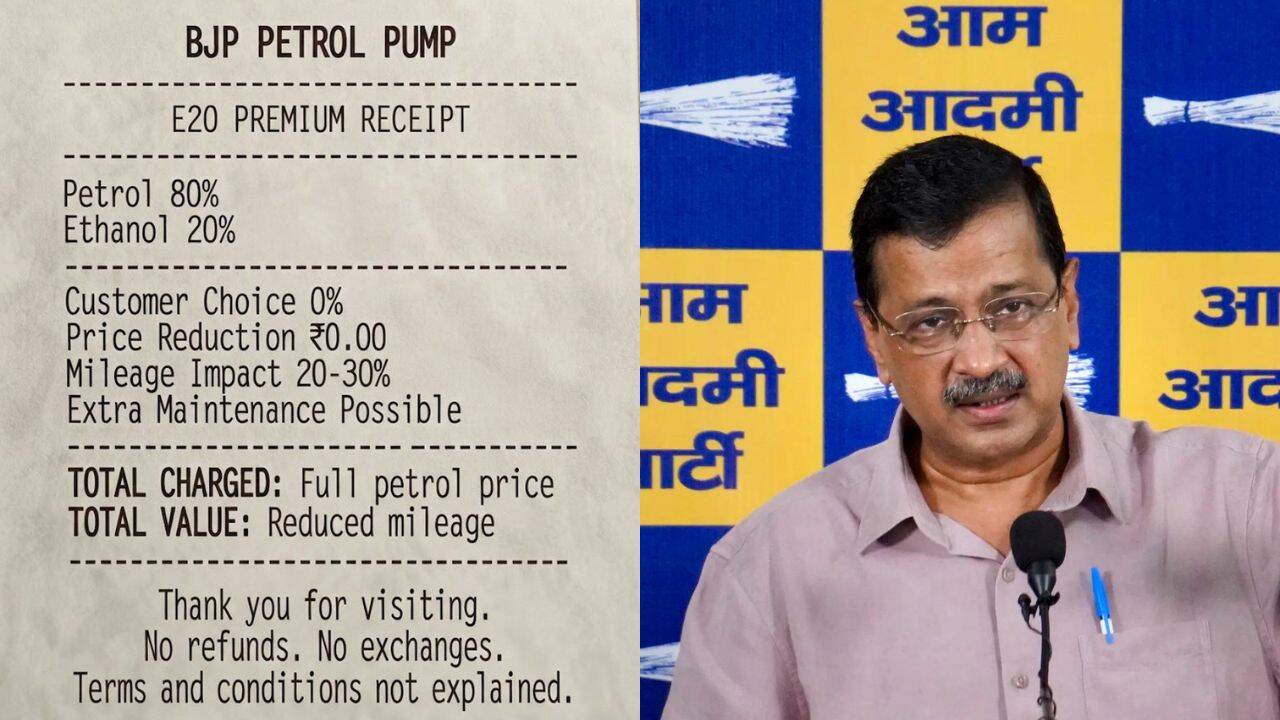
The Aam Aadmi Party (AAP) has taken a dig at the central government's ethanol blending policy by sharing a mock fuel receipt. The graphic, styled like a petrol pump bill, was shared on social media and targets the BJP-led government. It highlights concerns about the E20 fuel blend, which mixes 20% ethanol with 80% petrol, and questions its impact on vehicle performance and consumer costs.
Main Impact
The AAP's post is a direct political attack on the government's push for ethanol blending. By using a fake receipt, the party is trying to show that the policy may not be good for common people. The main point of the dig is that customers are paying full price for petrol but getting less mileage and possible extra maintenance costs. This has sparked a debate online about the real benefits and drawbacks of ethanol-blended fuel.
Key Details
What Happened
The AAP shared an image on social media that looks like a receipt from a petrol pump. The receipt is titled "E20 Premium Receipt" and lists the fuel as containing 80% petrol and 20% ethanol. It also includes fake line items like "Customer Choice 0%", "Price Reduction Rs 0.00", and "Mileage Impact 20-30%". The receipt ends with "TOTAL CHARGED Full petrol price" and "TOTAL VALUE Reduced mileage". A final line reads "Terms and conditions not explained".
Important Numbers and Facts
The E20 fuel blend is already being introduced in many parts of India. The government aims to have 20% ethanol blending in petrol by 2025. However, critics say that ethanol has lower energy content than pure petrol, which can reduce mileage by 6-10% in normal cars. Some older vehicles may also face engine problems with higher ethanol blends. The AAP's receipt claims a mileage impact of 20-30%, which is higher than official estimates.
Background and Context
Ethanol blending is a policy where a part of petrol is replaced with ethanol, which is made from crops like sugarcane and corn. The government says this helps reduce oil imports, supports farmers, and cuts pollution. But many car owners and experts have raised concerns. They say that ethanol can damage engines not designed for it, reduce fuel efficiency, and may not save money if the price of ethanol is not lower than petrol. The AAP's post is part of a larger political fight over fuel prices and government policies.
Public or Industry Reaction
The post has received mixed reactions online. Supporters of AAP say the receipt shows the truth about ethanol blending. They argue that the government is forcing a policy that hurts consumers. Critics, including BJP supporters, say the post is misleading. They point out that ethanol blending is a global practice and that modern cars are being made to handle E20 fuel. Some auto experts have also said that while mileage may drop slightly, the environmental benefits are real. The debate continues on social media.
What This Means Going Forward
The AAP's post is likely to keep the ethanol blending issue in the news. As the 2025 deadline for 20% blending gets closer, more people may ask questions about fuel quality and car compatibility. The government may need to do more to explain the policy and address concerns about mileage and engine safety. Car makers are already updating their engines for E20 fuel, but older cars on the road may face problems. This political attack could push the government to offer clearer information or even compensation for vehicle owners.
Final Take
The AAP's mock receipt is a clever way to question a government policy. While ethanol blending has benefits like reducing oil imports and helping farmers, it also has real costs for drivers. The key issue is transparency. If the government wants public support, it must clearly explain the trade-offs. Otherwise, political attacks like this will keep happening.
Frequently Asked Questions
What is E20 fuel?
E20 fuel is a blend of 20% ethanol and 80% petrol. Ethanol is a type of alcohol made from plants like sugarcane. The Indian government wants to use more ethanol to reduce pollution and oil imports.
Does E20 fuel reduce mileage?
Yes, ethanol has less energy than pure petrol. So using E20 fuel can reduce mileage by about 6-10% in most cars. The exact drop depends on the car and how it is driven.
Is E20 fuel safe for all cars?
New cars made after 2023 are designed to run on E20 fuel. But older cars may face problems like engine damage or poor performance. Car owners should check their vehicle manual before using E20 fuel.



